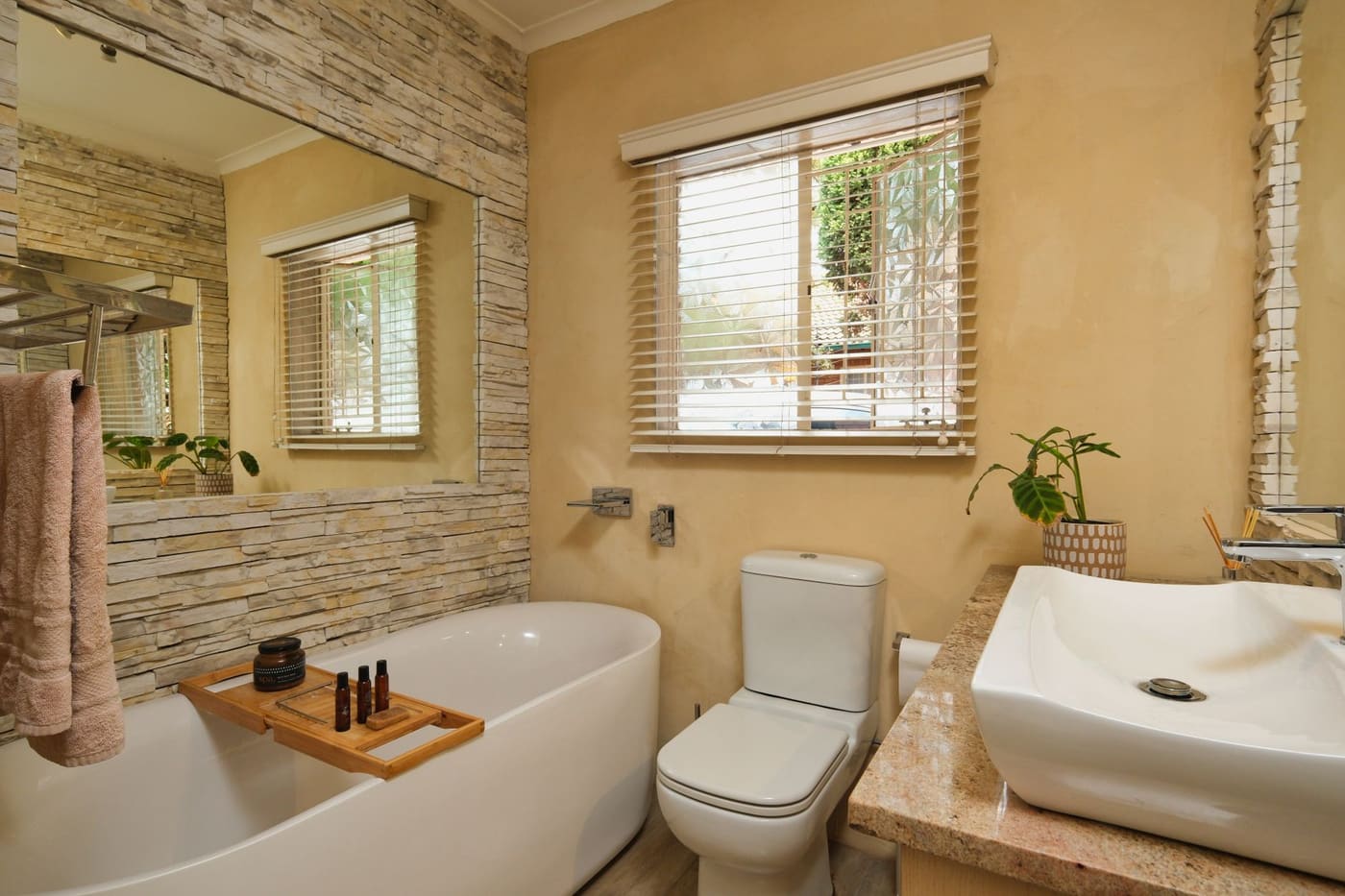
A bathroom feels warmer when you change three things: the color temperature of the light, the materials you touch, and the undertone of the colors around you. Swap cool white bulbs for a warm white around 2700K, add one natural material such as wood or woven fiber, and trade thin towels for thick ones. None of this requires clutter, and most of it costs less than a weekend dinner out.
Sterile is usually a stack of small causes. Hard white tile, chrome, a plastic soap dispenser, a thin white towel, and a flat overhead light all reflect the same cool tone around the room. The sections below take them one at a time so you can find the cause in your own bathroom.
Start with the light color, not the lamp
Light is the biggest driver of whether a bathroom reads clinical or cozy. Bulbs are labeled by color temperature in kelvins. Bulbs at 4000K or above look bluish and office-like to many people. A bulb at 2700K looks like a traditional incandescent, and 3000K sits just on the crisp side of warm.
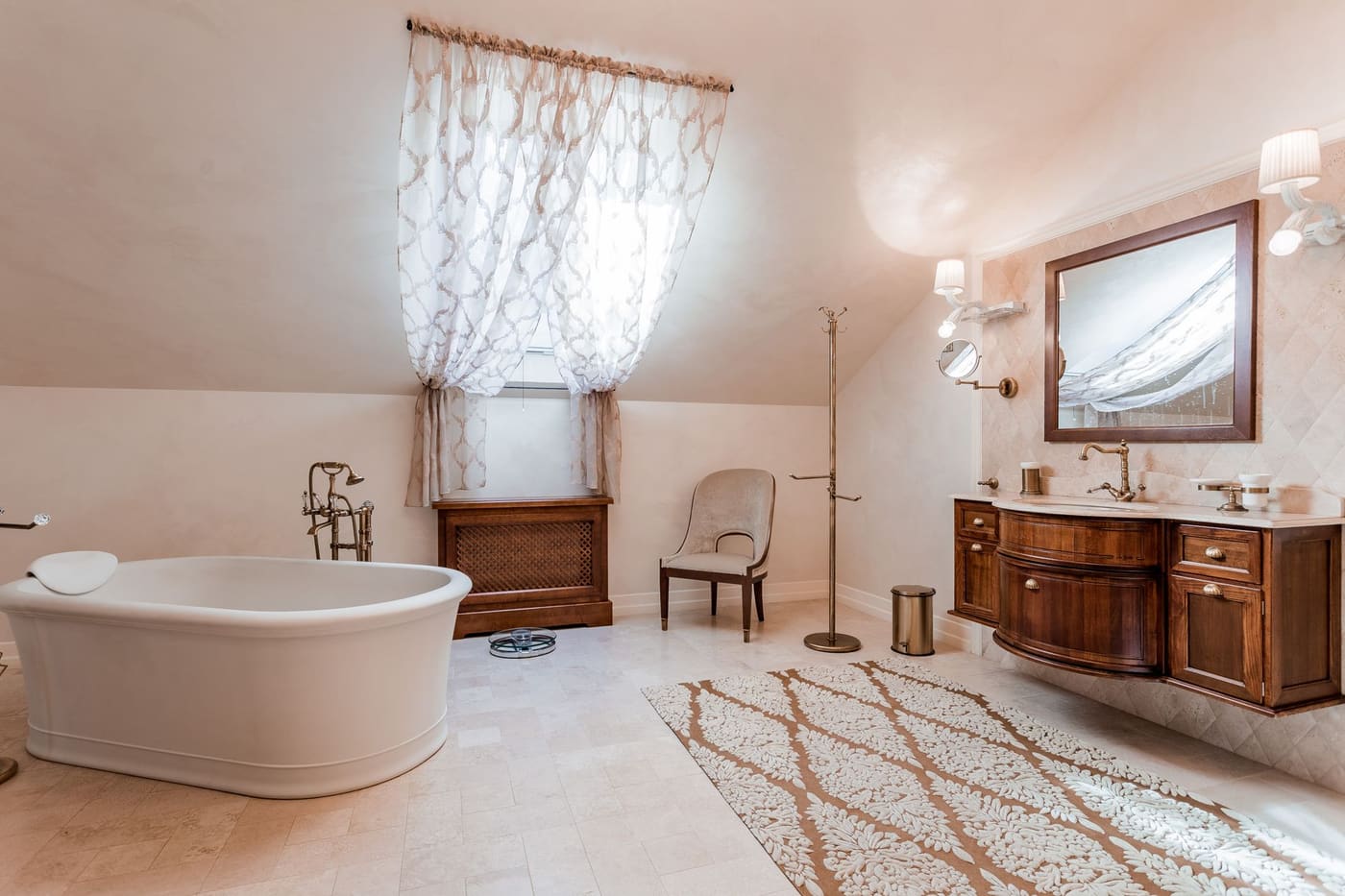
- 2700K: Warmest, best for a relaxed look. It can make white paint look slightly cream.
- 3000K: A good compromise if you also use the mirror for grooming and want the light to stay clean.
- 4000K to 5000K: Fine for a garage or laundry room, but it makes bathroom skin tones look gray and walls look cold.
Also check the color rendering index (CRI) printed on the box. A bulb with a CRI of 90 or higher shows skin and wood tones more naturally than a cheap 80 CRI bulb at the same kelvin number. Bulbs usually cost a few dollars each.
Fixtures near a tub or shower must carry a damp or wet rating depending on where they sit, and any change to wiring or a fixture’s electrical connection is a job for a licensed electrician. Swapping a bulb for another bulb with the same base and a wattage the fixture allows is not a wiring change. If you want extra glow without touching the circuit, a battery or plug-in light on a dry shelf, well away from water, adds a pool of warmth. For more on light choices, see what bathroom lighting actually helps.
Add one natural material, not five
Warmth comes from materials that look like they came from the earth: wood, rattan, linen, stone, clay, and unlacquered metal. The mistake is buying a matching set of everything. One or two is enough.
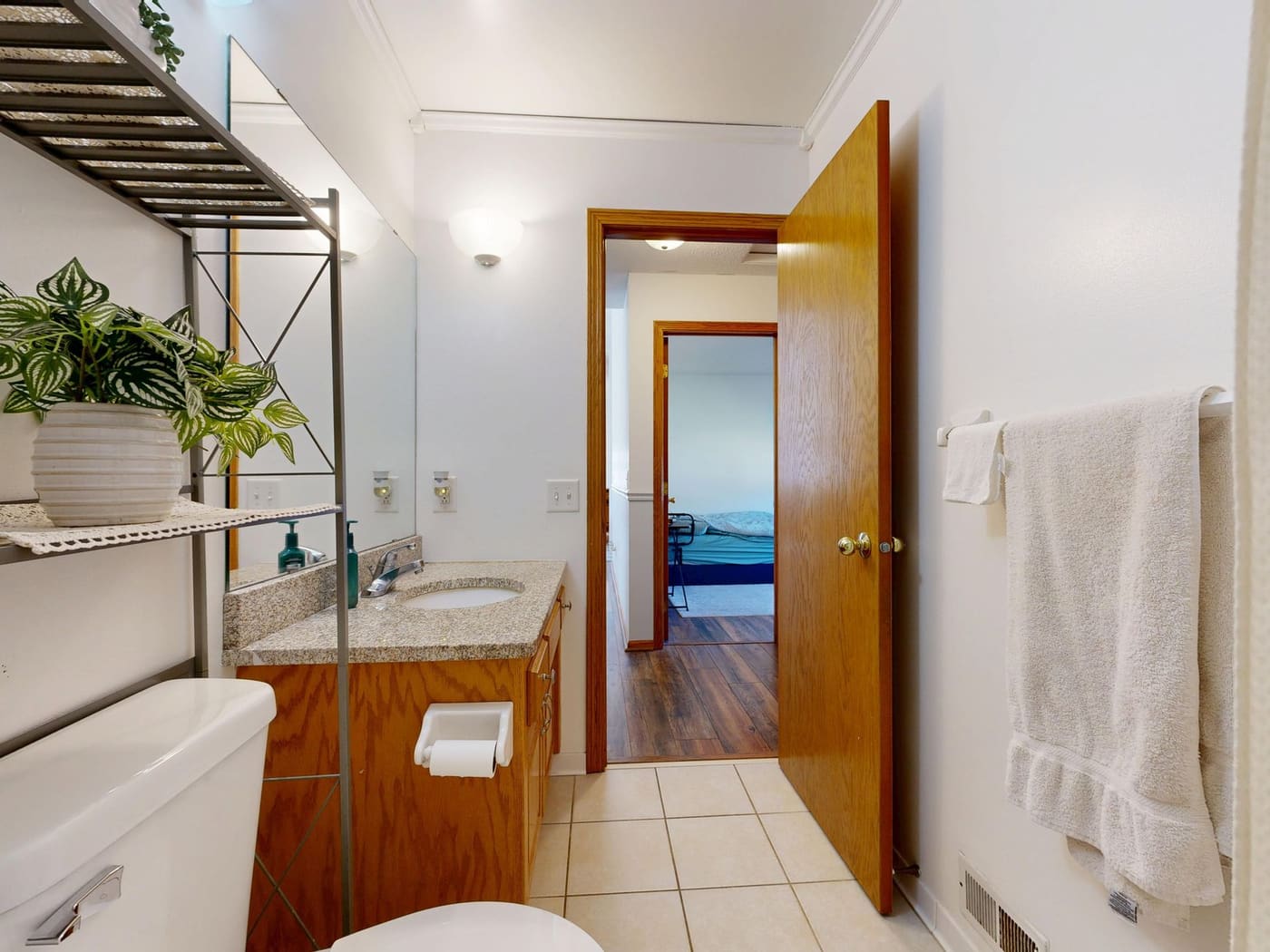
Good bathroom-safe choices:
- A wooden tray, stool, or bath caddy. Teak and acacia tolerate steam better than untreated pine. Choose one with an oiled or sealed finish, and let it dry between uses.
- A woven basket for rolled towels. Seagrass, water hyacinth, and rattan add texture on a shelf or the floor.
- A ceramic or stoneware cup and soap dish. Matte glazes feel warmer than shiny plastic, and a stoneware set often costs about the same as a plastic one.
- A wood-framed mirror or a wood shelf. This is the bigger purchase, but it can act as the main material in the room.
Keep wood out of the shower’s direct spray, wipe up standing water, and avoid surfaces that stay wet. A wood piece that is always damp will darken, warp, or grow spots.
Choose textiles you can feel
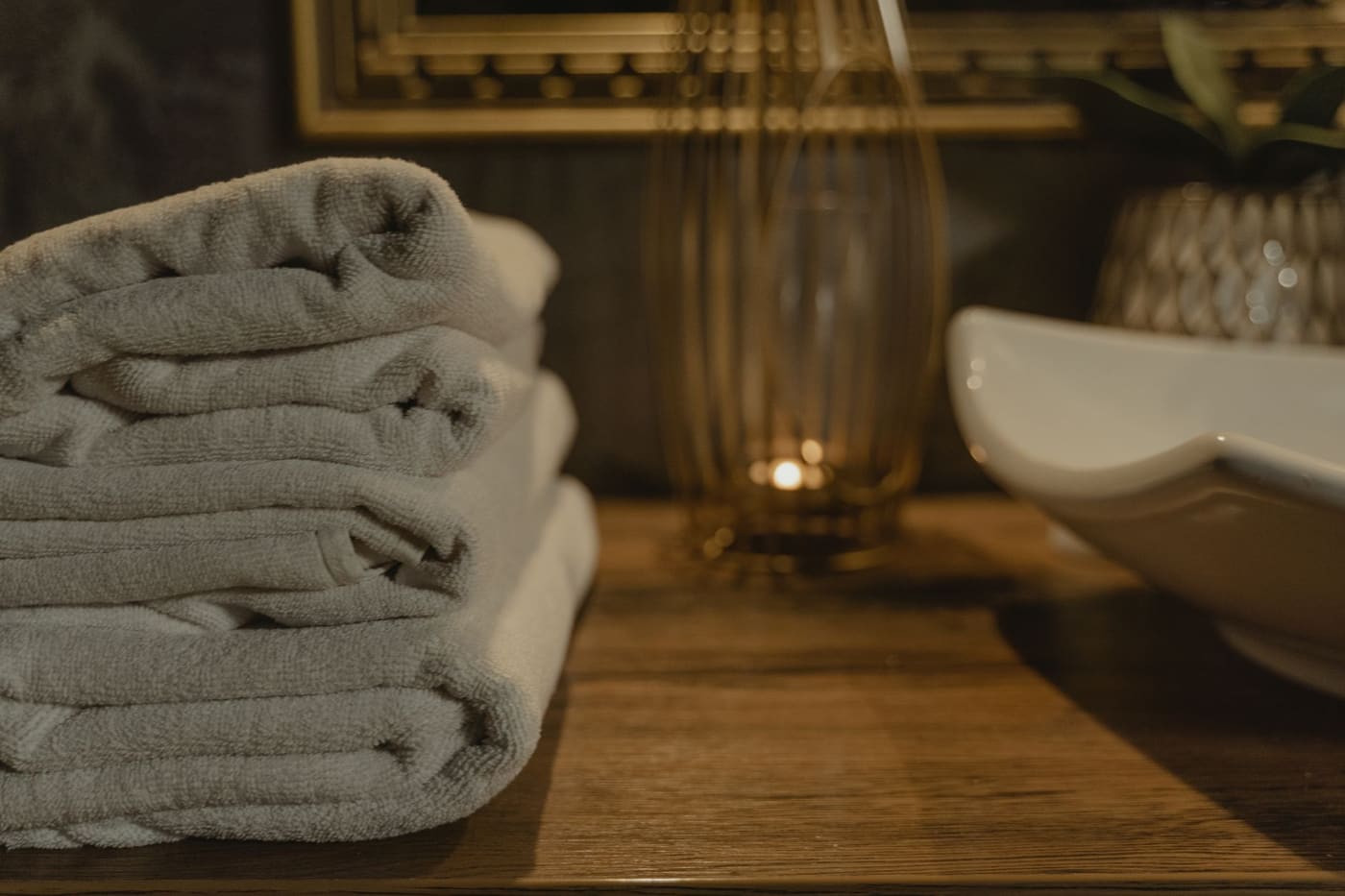
Thin, flat-woven towels look and feel cold. Thick cotton terry, waffle weave, and linen-cotton blends give visual softness and pile. A towel in roughly the 600 to 700 gsm range (grams per square meter, listed on many packages) tends to feel plush, though denser towels take longer to dry. Waffle and linen blends dry faster and still look relaxed.
Pay attention to the floor, because bare feet decide how a room feels. A thick cotton bath mat with a nonslip backing gives the first warm moment of the morning. Wash it weekly and hang it to dry so moisture does not sit in the pile. Check the backing first, since some rubber backings can stick to or mark certain flooring.
A fabric shower curtain with some weight, hung over a clear or frosted liner, also changes the room. Thin plastic curtains look and sound cold. A cotton or linen-blend curtain softens the whole wall, though it still needs a liner to keep water off the fabric.
Pull the color toward warm undertones
White is not one color. A stark blue-white wall next to gray tile makes a room feel like a clinic. A white with a yellow, cream, or pinkish undertone feels gentler. If you are repainting, tape sample cards on the wall and look at them in the morning and in the evening before deciding. A gallon typically covers about 350 to 400 square feet per coat, which is enough for two coats in most small bathrooms, and a satin or semi-gloss bathroom-rated paint resists moisture better than flat.
Common warm choices that stay calm instead of loud:
- Warm white, cream, or greige on the walls.
- Soft clay, sand, or terracotta as an accent on a towel, tray, or art print.
- Muted olive or deep green in a plant, a small painting, or a towel.
- Brass, bronze, or brushed gold in small hardware swaps, instead of cool chrome throughout.
You do not have to change the tile. If the tile is gray or cold white, warm elements around it balance it. Renters should check the lease before painting, drilling, or swapping fixtures, and keep any original hardware to reinstall.
Plants that survive steam
Greenery adds life, softens hard lines, and reads as warm even though the leaves are green. Bathrooms offer humidity, but many have little light, so choose plants that tolerate both.
- Pothos: Handles low light and trails nicely from a shelf.
- Snake plant: Tolerates low light and irregular watering.
- ZZ plant: Very forgiving of neglect and dim rooms.
- Peace lily: Likes humidity, and it droops visibly when it needs water.
All four of these plants can irritate or poison pets if chewed. If you share your home with a cat or dog, check each plant against a pet-safety list from your veterinarian before bringing it in, or keep the pot out of reach.
If the room has no window, a living plant may struggle, and a good dried or artificial stem in a vase is a reasonable substitute. Do not let a pot sit in standing water, and keep soil from dripping onto surfaces.
Replace the cold plastic first
Count the plastic in your bathroom. The pump bottles, toothbrush holder, bin, toilet brush, and soap dish are often all different shades of white and clear. Swapping them for a matched set in ceramic, glass, or stainless steel lowers the visual noise right away. Decanting soap into one refillable pump costs a few dollars and removes loud branding from the counter.
Matching does not mean identical. Aim for two or three shared qualities, like a matte finish, a cream or warm gray color, and rounded shapes. For a closer look at what belongs on the counter and what should go in a drawer, read what to keep on a bathroom counter and what should go.
Soften the hard lines with one piece of art
Plain white walls above a plain white sink look empty. One piece of art, such as a framed print or a small wood-framed mirror, gives the eye somewhere to land. Use a print behind glass or acrylic and hang it away from the shower spray, since humidity can damage unframed paper.
A mirror with a thin brass or wood frame can change a whole wall. Follow the manufacturer’s mounting instructions, and check the lease before attaching anything to a rental wall.
Warmth is also temperature
A bathroom that feels cold to stand in will not feel warm however you style it. A plug-in towel warmer or heated bath mat warms the moment you step out of the shower. Keep any such device away from water and plug it into an outlet with ground-fault (GFCI) protection, which is required for bathroom outlets in new wiring and a good sign to check for in older ones. Do not use extension cords in wet areas, and leave any new wiring to a licensed electrician.
Closing the door and running the fan during and after a shower also helps. A bathroom that fogs less feels cleaner as well as warmer.
Where to stop
Pick two or three of these moves, do them well and leave the rest of the shelf empty. A warm bulb, one natural material and thick textiles carry most of the effect. If you want the same restraint aimed at a more polished look, the matching and mirror advice in updating a bathroom without a full renovation pairs well, and for renter-safe touches see making a rental bathroom feel more personal.
Where this comes from
This article draws on US Department of Energy and ENERGY STAR lighting guidance on color temperature and color rendering, ASPCA plant toxicity listings, and general guidance on bathroom electrical protection. The material and color advice is design common sense rather than tested results. Prices are typical US ranges that vary by store and region.