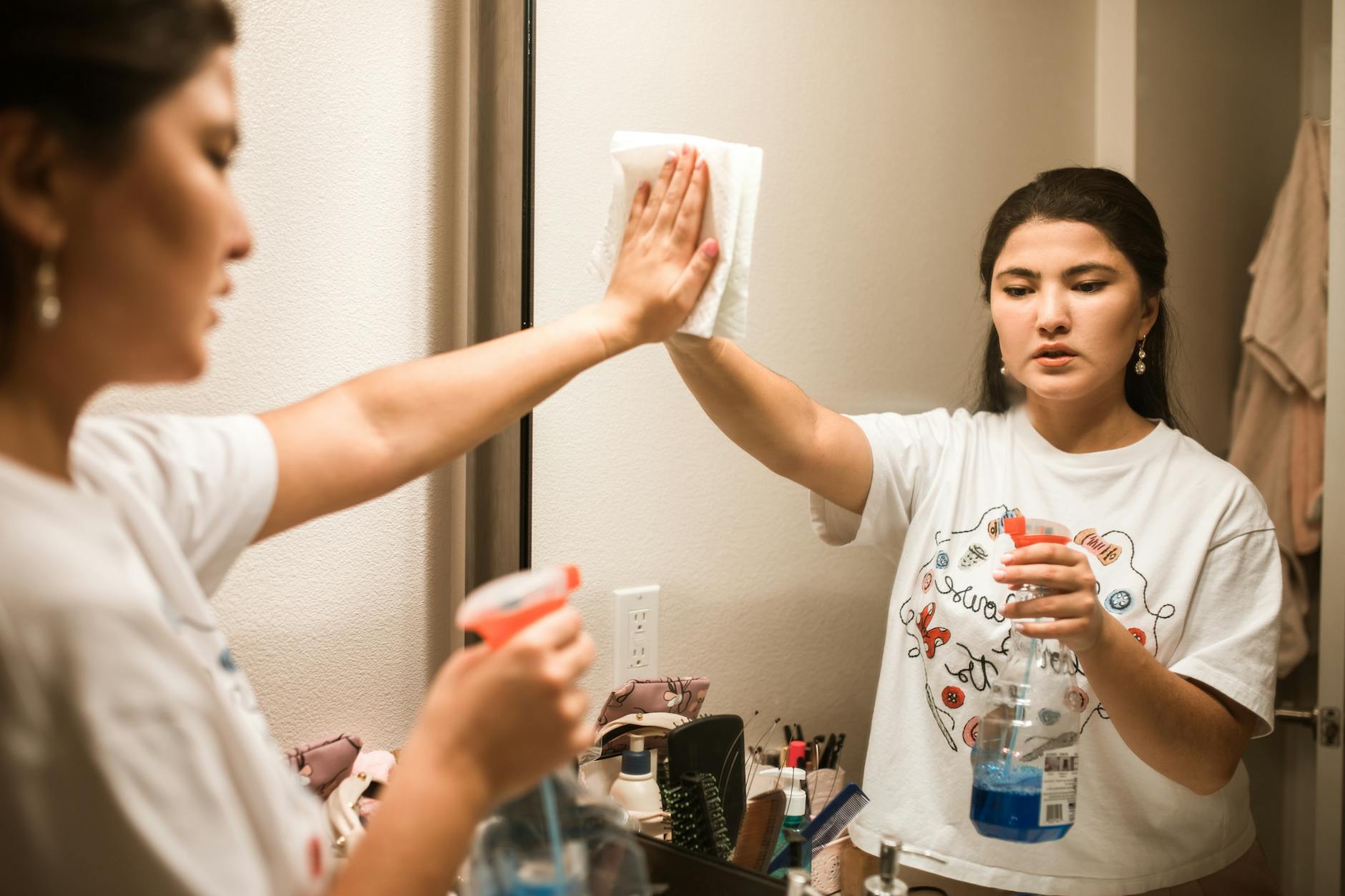
Match what you notice to the table, then fix that one thing. A bathroom feels dirty after cleaning when the cues your senses use to judge cleanliness are not the same as the surfaces you scrubbed. A damp smell, gray towels, a hazy mirror, black lines in caulk, or a crowded counter all say “dirty” even when the toilet and sink are fresh.
| What you notice | Likely cause | Fix |
|---|---|---|
| Damp or musty smell | Slow-drying towels, mat, drain film, high humidity | Wash fabrics, clean drains, reduce moisture |
| Chemical or perfumed smell on top of dampness | Cleaner or air freshener masking odor | Rinse surfaces, stop the fragrance, find the source |
| Floor feels sticky or gritty | Cleaner residue or soap film | Rinse with plain water, use less product |
| Mirror and glass look hazy | Product film, wrong cloth, hard water | Glass cleaner and a lint-free cloth |
| Gray or black lines in grout and caulk | Mildew or ground-in grime | Scrub grout, replace failing caulk |
| Towels look dull or smell | Detergent buildup, slow drying | Strip wash, dry fully, replace worn ones |
| Counter looks messy even when wiped | Visual clutter | Reduce items, use a tray |
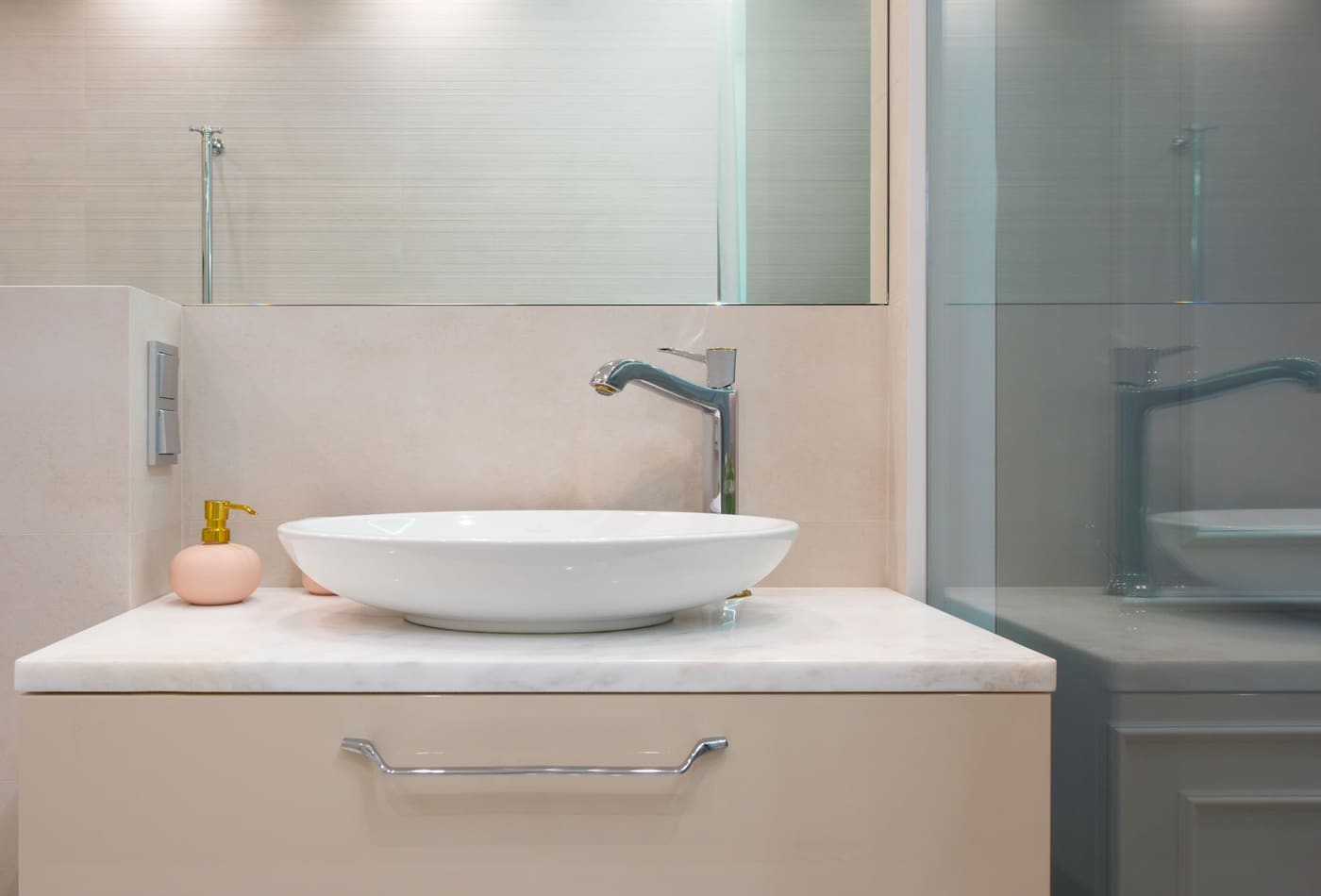
| Fixtures look dull | Water spots and soap film | Buff dry after wiping |
| Room looks different in the morning | Lighting | Check under daily light, match bulbs |
This is common and frustrating, because you did the work and the room does not reward you. The cause is usually that cleaning focused on surfaces while the problem sits in air, fabric, light, or material that has aged beyond what a spray can fix.
Start with a guest’s-eye walkthrough
Walk in as if you were a guest and ask four questions in order.
- What do you smell in the first second, before you adjust to it? Damp, sour, sewer, or chemical?
- What do you see from the doorway? Clutter, gray fabric, a dull floor, or a stained corner?
- What do you feel with your hand on the sink, tub edge, or floor? Slick, gritty, sticky?
- What does the room look like in the light? Do spots and streaks appear?
The sections below follow the table, strongest signal first.
Cause 1: The smell is not gone
Smell is the strongest signal, and most “feels dirty” cases involve smell. If the air is damp or stale, the room feels unclean no matter how it looks.
- Check the soft goods first. A bath mat, a towel in the hamper, or a shower curtain with mildew in the hem can carry the whole smell. Wash and dry them completely.
- Clean the drain stopper and overflow hole. Hair and soap film underneath smells like old sponge.
- Run water down any drains you rarely use, to refill the trap.
- Check humidity. A small hygrometer is often under $20, and EPA guidance says indoor humidity should stay below 60 percent, so a reading above that for long stretches means the air itself is the problem. The bathroom fan size calculator can help if the fan is the weak link.
If the smell persists after you clean these places, the guide on stopping a bathroom from smelling damp even after cleaning goes through hidden sources in more depth, including leaks. Air fresheners and scented sprays only cover odor, and they can add a chemical smell that feels dirty in its own way.
Cause 2: Soap film and cleaner residue
Over-cleaning is a surprising cause. Cleaners left on surfaces dry into a film that attracts dirt, and the surface feels slightly tacky afterward. Hard water adds a second layer: mineral spots that make glass hazy and fixtures dull.
- Use less product than you think. A few sprays per surface is enough.
- Rinse or wipe with a damp cloth after cleaning, especially on the floor and tub.
- Do not layer products. Switching between brands without rinsing can leave a film.
- Mop with a capful of cleaner in a bucket of water, or just warm water for light soil. Too much cleaner leaves floors sticky.
- Buff fixtures dry. Water left to evaporate leaves new spots. For hard water crust at the base of a faucet, a toothbrush and a little white vinegar loosens it, but do not use vinegar on natural stone or on finishes the manufacturer warns against.
- Clean glass with a lint-free cloth. Spray the cloth, not the mirror, so liquid does not run behind the frame edge, and buff dry.
Use one product at a time and never mix bleach with ammonia or acids, including vinegar. Open a window or run the fan, and wear gloves.
Cause 3: Grime in the places your eye goes
Some grime sits in spots that a normal wipe misses, and those are the places people notice.
- The base of the faucet and around the drain, where gray or green mineral buildup collects.
- The bottom of the shower door track, where water pools.
- Toilet seat hinges and the base, where splashes dry. A toilet that looks clean inside but has a dusty base and stained hinges still looks dirty.
- The wall behind the toilet and the side of the vanity.
- The top of the door frame and the exhaust fan cover, where dust makes the room feel unkept.
- Grout lines in the lower tile rows near the tub.
A toothbrush and an all-purpose cleaner handle most of this. It takes about 15 minutes to go through all of these spots once, and they rarely need repeating more than monthly.
Cause 4: Lighting reveals more than you see
Light changes how clean a room looks. Harsh light from one direction casts shadows over streaks and shows every water spot. Dim, yellowish light makes white fixtures look gray. If you cleaned in dim light and the room looks different in the morning, light is why.
- Clean under the same light you use daily, and check again with a flashlight or phone light held at an angle to catch streaks.
- Dust fixtures and replace burned-out or discolored bulbs. Use bulbs rated for the fixture and the damp location. Changing wiring or a fixture is a job for a licensed electrician.
- Use matching bulbs. A mix of warm and cool white makes the room look uneven.
The article on what bathroom lighting actually helps explains which choices make a room look cleaner and brighter.
Cause 5: Visual clutter reads as dirt
A counter with 15 items looks dirty even if each one is clean, because the eye cannot rest and the room looks like it is waiting to be tidied. That is why a bathroom can feel worse right after cleaning, when you put everything back where it was.
- Take half of what is on the counter and put it in a drawer.
- Group the rest on a tray.
- Remove items from the tub ledge and tank top.
- Hide the toilet brush and plunger in a closed holder or cabinet.
- Wipe the rim of the soap pump and the base of the toothbrush holder, where gunk gathers.
Cause 6: Towels and mats
Towels and mats occupy a lot of visual space and carry smell. Gray, thin, or damp-looking towels pull the whole room down.
| Detail | What makes it look dirty | Quick fix |
|---|---|---|
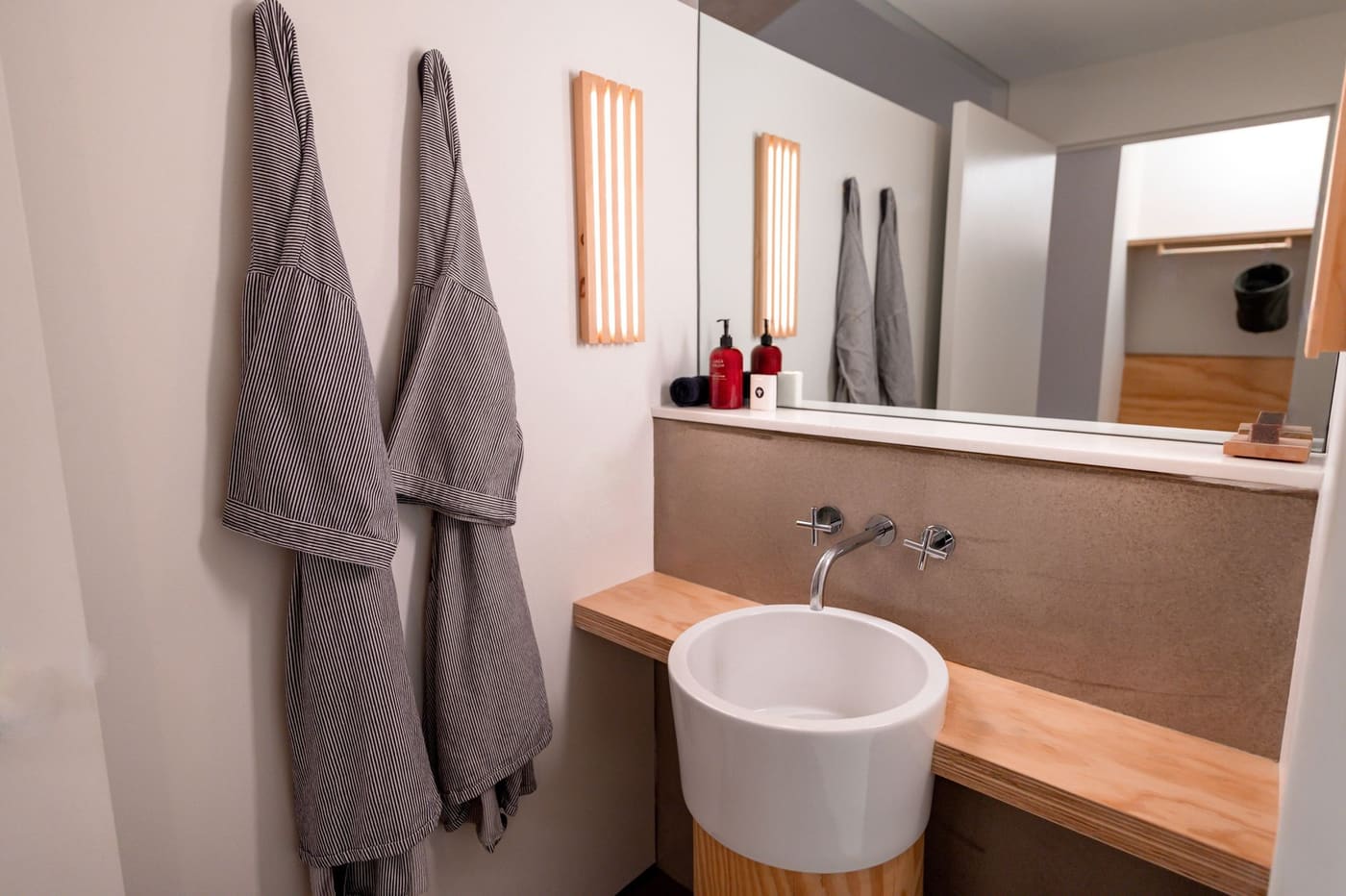
| Bath towels | Faded, stiff, or bunched | Wash about every three uses, or at least weekly; replace worn ones; hang spread out |
| Hand towel | Stained at the center | Swap every two or three days |
| Bath mat | Flat, damp, or discolored | Wash weekly; hang to dry |
| Shower curtain or liner | Pink or black spots on the hem | Wash or replace |
| Rugs | Hair and lint trapped in pile | Shake out and vacuum |
Skip fabric softener on towels, which coats fibers and leaves a dull feel and a stale smell. Matching towels in one or two colors also reduces visual noise. The guide to keeping bath towels tidy covers counts and hanging in detail.
Cause 7: Stained or worn materials
Sometimes the room feels dirty because the materials have aged past what cleaning can restore.
- Caulk that is black inside, cracked, or peeling will never look clean. Replace it. Silicone caulk is often under $15 a tube and takes an afternoon of work, and renters should ask the landlord.
- Grout that is deeply stained may need a stronger cleaner, a grout pen, or professional regrouting.
- Porous or scratched tub and sink surfaces hold stains. Gentler cleaning and sealing may help, but refinishing is a professional job.
- Old shower curtains and liners with permanent spots should be replaced for a few dollars.
- Worn towels and mats that look gray after washing can be retired.
If you see soft spots, rust-colored stains seeping from walls or floors, or mold that returns quickly, water may be getting into the structure. Recurring mold and any water damage behind walls is a professional job.
Cues to check before guests arrive
Visitors judge in seconds, mostly by sight and smell. When you have about 10 minutes, do these in order:
- Clear and wipe the counter and sink.
- Wipe the faucet and buff it dry.
- Clean the mirror.
- Wipe the toilet exterior, hinges, and base.
- Swap the hand towel and straighten the bath towel.
- Empty the trash.
- Sweep the floor edges.
- Check that the bulbs all work and the air smells neutral.
Each step maps to something a visitor sees. If you only have 5 minutes, the five-minute reset trims it further. Skip deep jobs such as grout scrubbing and descaling before a visit, since they rarely change the first impression.
Holding the result
Do the guest’s-eye walkthrough once, name the cue that is firing, and fix that one. If it is smell, wash the fabrics and drains first. If it is clutter, empty half the counter. If it is caulk, replace it. After that, a short routine holds it: squeegee and wipe daily, a five-minute reset every two or three days, and grout, drains, and fabrics monthly, as laid out in the cleaning schedule.
Where this comes from
This guide is a diagnostic checklist built from common cleaning practice rather than a single standard. The humidity figure comes from US EPA moisture guidance, the safety wording on mixing cleaners reflects CDC and EPA guidance, and the towel interval reflects dermatology advice from health systems. Prices are typical US ranges that vary by store and region.