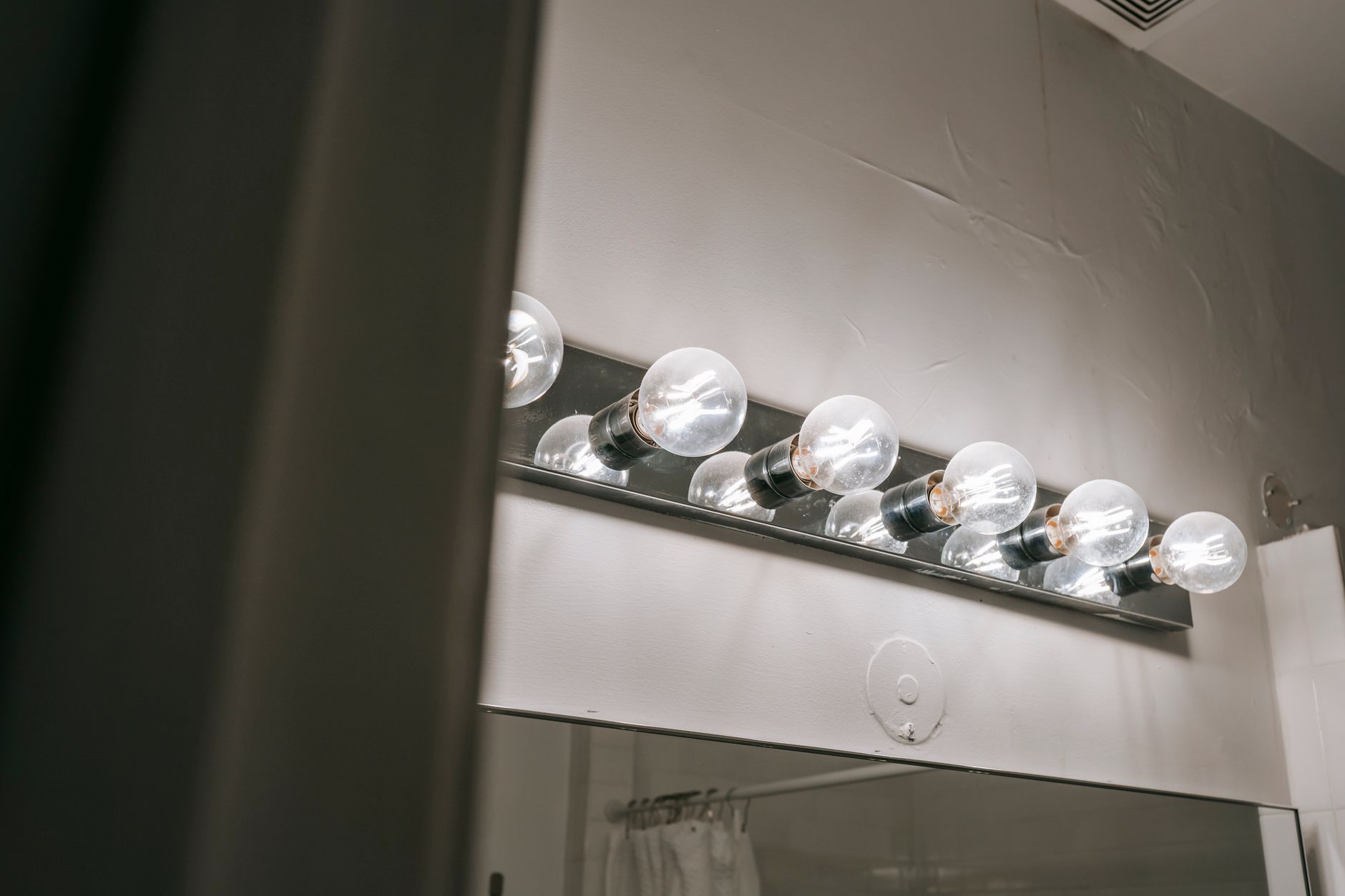
Harsh bathroom light almost always comes from three things you can change without touching the wiring: a bulb that is too cool and too bright, a bare or clear bulb with no diffusion, and hard reflective surfaces that bounce the glare back at you. Swap to a warmer, frosted bulb, add diffusion, and reduce the shine around the mirror, and the same fixture will feel noticeably softer in an afternoon.
“Harsh” is really two complaints bundled together. One is glare, where you see a bright point of light or its reflection. The other is hard shadow, where a single overhead source carves dark patches under your eyes and chin. The fixes differ, so it helps to work out which one bothers you before you buy anything.
Work out what kind of harsh you have
Stand at the mirror with the light on and check three things.
- You can see the bulb itself, or its reflection in the mirror or tile. That is glare. Diffusion and a lower-output bulb fix it.
- The light feels blue-white or hospital-like. That is color temperature. A warmer bulb fixes it.
- Your face looks gray or striped with shadow. That is direction. Light needs to come from the sides or at face height, which is a placement issue covered in the guide to what bathroom lighting actually helps.
Most rooms have a mix, but one usually dominates. Fix that one first and judge the result for a few days before changing more.
Change the bulb first
The bulb is the cheapest and most effective change, and it needs no tools beyond a stool. Turn the fixture off at the switch and let the old bulb cool before you touch it.
Color temperature
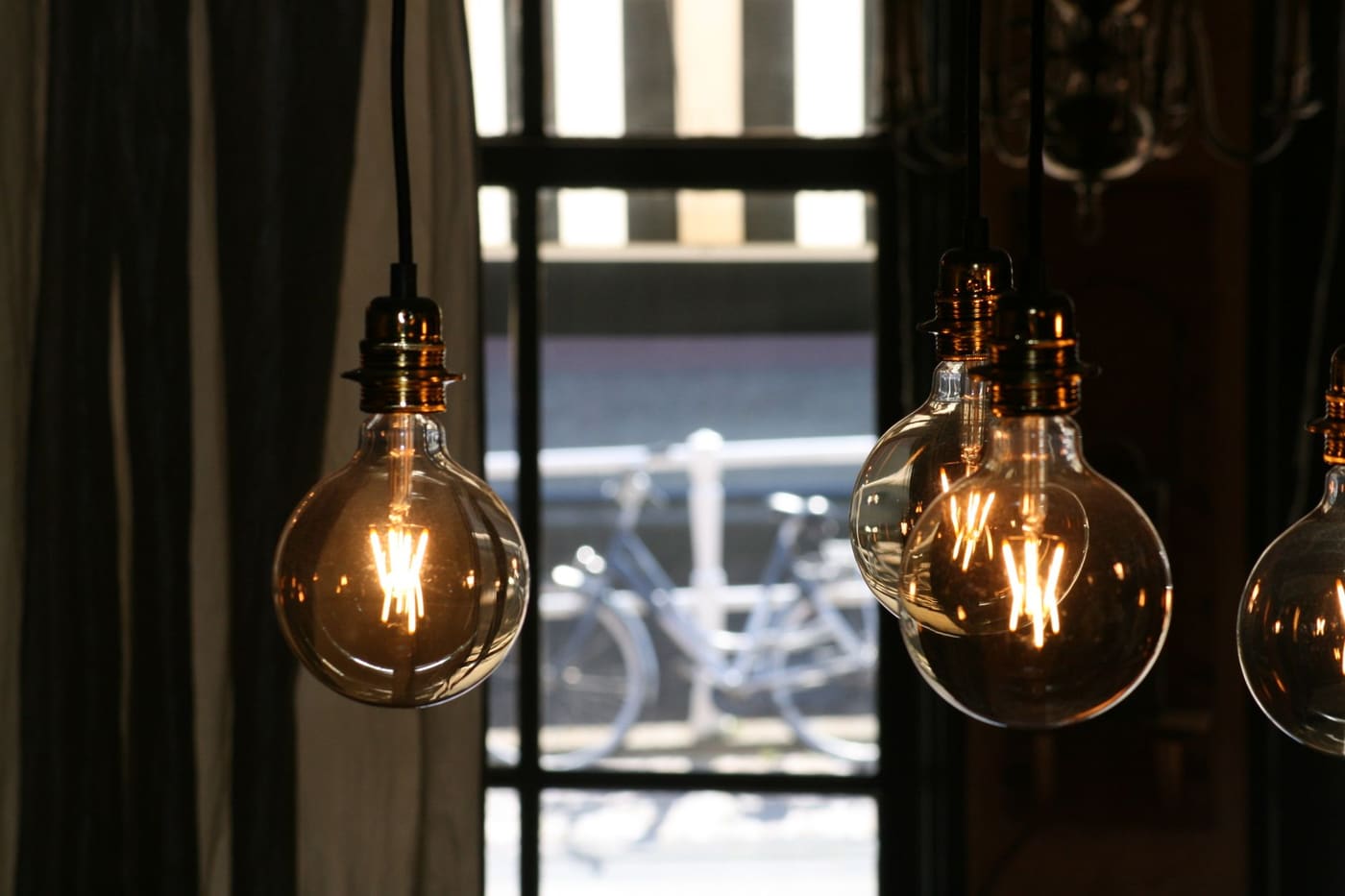
Color temperature is measured in kelvins (K). Bulbs sold as “daylight” are around 5000K to 6500K and look blue-white, which many people find clinical in a bathroom. Soft or warm white sits near 2700K and looks yellowish like an old incandescent. Around 3000K is a common middle ground for bathrooms: clean enough to see your skin accurately, warm enough not to feel like a clinic. Keep every bulb in one fixture the same color temperature so the light looks even.
Brightness
Brightness is measured in lumens, not watts. A traditional 60-watt bulb produced roughly 800 lumens, and an LED sold as a 60-watt replacement is labeled about 800 lumens. If your fixture holds three or four bulbs, 800 lumens each can be a lot at close range. Dropping each bulb to 450 to 600 lumens often removes the blast without making the room dim.
Check the label before you swap
- Never exceed the maximum wattage printed on the fixture, even with LEDs, unless the label says otherwise.
- If the bulbs sit inside a closed glass shade, choose bulbs marked as suitable for enclosed fixtures.
- If the circuit has a dimmer, use bulbs labeled dimmable. A non-dimmable LED on a dimmer can flicker or buzz, and even dimmable bulbs can behave differently on older dimmers, so check the bulb package or the dimmer maker’s compatibility list.
- A fixture inside a shower enclosure or in the splash zone needs a damp or wet rating, depending on how directly water reaches it. That rating belongs to the fixture, not the bulb.
LED bulbs typically cost $2 to $8 each. A set for a four-bulb vanity bar is usually well under $30.
Add diffusion where the light leaves the fixture
A clear or bare bulb is a tiny, intense point source, which is exactly what glare is. Spreading that light over a larger surface softens both glare and shadow.
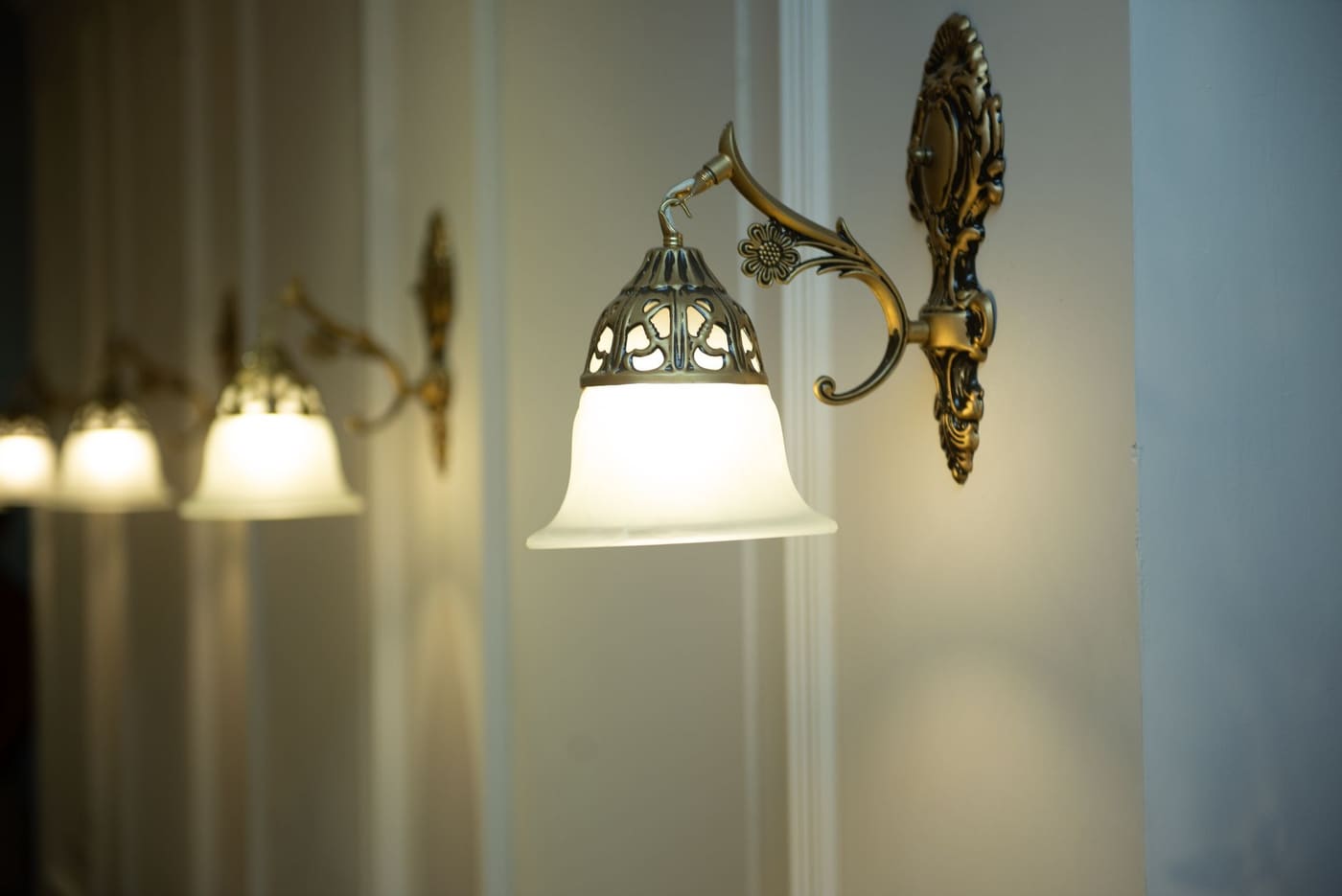
- Choose frosted or opal bulbs in place of clear ones. The frosting scatters light inside the glass.
- Replace clear glass shades with frosted or white glass if the shade is a simple screw-on or clip-on type. Many are secured by a small screw or ring and come off by hand, but if yours needs wiring disconnected, leave it alone.
- Use globe or standard-shaped bulbs rather than tube or exposed-filament styles in open vanity bars. Filament styles look decorative but are the hardest to look at near a mirror.
- Point bulbs sideways or up where the fixture allows it. Bulbs facing upward bounce off the ceiling and soften the room, while bulbs facing straight down put glare on the counter.
Test one change at a time. If a frosted bulb alone fixes the problem, you do not need a new shade.
Diffusers, films and shades: heat and enclosed-fixture cautions
A diffuser is anything that spreads the light: a frosted glass shade, an opal cover, a fabric shade on a lamp or a light-diffusing film. Used well, it softens glare without a new fixture. Used badly, it traps heat.
- Never add paper, fabric or adhesive film inside or against a bulb that gets hot, and do not stack a second cover over a fixture’s own shade. LEDs run cooler than old incandescent bulbs, but they still produce heat at the base.
- If a fixture has a closed glass shade, use only bulbs rated for enclosed fixtures. Others can overheat and fail early.
- Check the fixture label for its maximum wattage, and do not exceed it, even with LEDs, unless the label says otherwise.
- If a shade is held on by wiring or a hidden screw you cannot reach, leave it alone and call a licensed electrician.
- Wipe glass shades before judging the light. Dust and insect debris inside can make a fixture look dim and yellow.
Tame the reflective surfaces around the light
Shiny surfaces can double the glare. Look at what the light hits.
- Glossy white tile and chrome fixtures bounce light straight back. Matte or textured towels, a fabric bath mat, and a matte soap dish reduce reflected sparkle at counter height.
- A mirror with a bright, bare edge shows reflections of the bulbs themselves. Moving the mirror is rarely practical, but angling a shade or lowering bulb output helps.
- High-gloss paint reflects more than eggshell or satin. If you own the home and plan to repaint, a moisture-rated satin or semi-gloss in a warm off-white is a typical choice. Renters should check the lease before painting anything.
Soft wall color matters more than people expect. A cool bright white wall under cool bulbs looks harsher than a warm white wall under the same bulbs.
Add a second, softer light source
If the main fixture stays bright no matter what you do, stop asking it to do everything. A plug-in or battery light on the counter gives a lower, warmer pool of light you can use alone for evening routines and night trips.
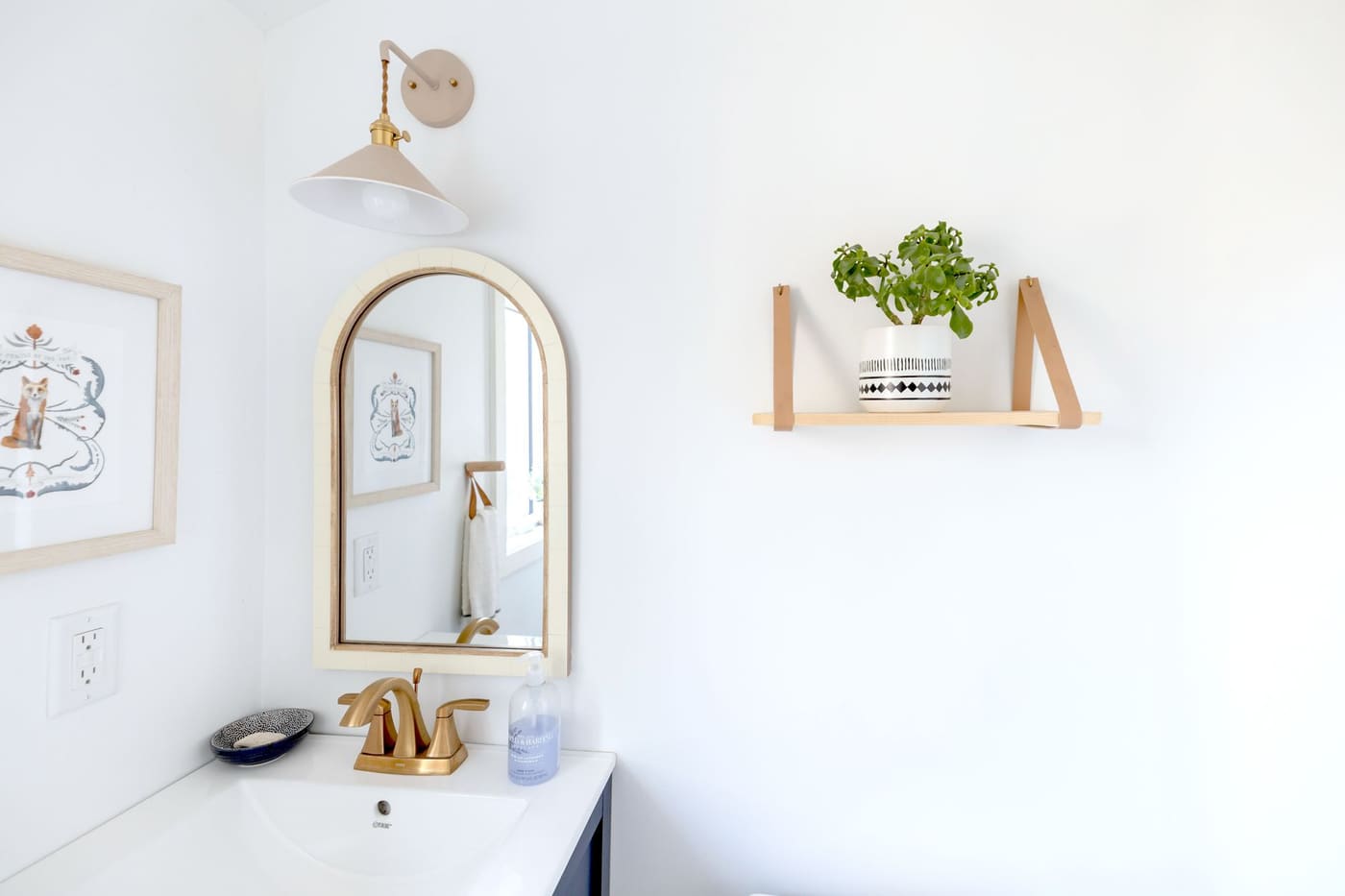
Options that need no wiring:
- A small plug-in lamp with a fabric or frosted shade on a shelf, kept well away from the sink and tub.
- A rechargeable LED puck light stuck under a shelf edge or inside a medicine cabinet.
- A motion-sensor night light in an outlet, which means you skip the overhead fixture for middle-of-the-night visits.
Any cord near water carries risk. Keep cords short and clear of splash zones, plug into outlets protected by a ground-fault circuit interrupter (the kind with test and reset buttons), and never use a lamp that is not designed for damp conditions where it can be splashed. If you are unsure whether an outlet is protected, ask an electrician.
Battery and plug-in sconce types
Side light is the cure for hard shadows, and you can add it without wiring.
| Type | Typical cost | Good for | Watch out for |
|---|---|---|---|
| Battery sconce on adhesive or screws | Often $20 to $60 each | Renters, a pair beside the mirror | Check weight limits, test removal on a hidden spot, replace or recharge batteries |
| Rechargeable vertical light bar | Often $20 to $50 | Side light that you can move | Charge it away from the sink |
| Plug-in sconce with a short cord | Often $25 to $70 | A fixed pair with steady power | Keep the cord away from splash zones and use a ground-fault-protected outlet |
| Stick-on LED strip along the mirror sides | Often $15 to $40 | Soft side glow | Strips can peel in steam and may mark paint |
Battery types avoid cords, but keep them out of direct spray and away from the tub and shower. Pick a warm 2700K to 3000K setting and a frosted face rather than a bare chip.
Consider your switch, but call someone for changes
A dimmer is one of the best cures for harsh light because most of the day you need less than full brightness. But replacing a wall switch with a dimmer means working inside an electrical box, and that is a job for a licensed electrician, especially in a bathroom. If you already have a dimmer, use it and match the bulbs to it. If you do not, plug-in lamps with their own dimmers or warm-tone bulbs are a safe workaround.
A sensible order to try things
Start with the cheapest change and move down only if the problem remains.
- Replace the bulbs with warm, frosted ones at lower lumens.
- Check whether the shade is clear and replace it with frosted only if it comes off without wiring.
- Change surfaces within arm’s reach of the mirror: matte towels, a soft bath mat, fewer chrome accessories.
- Add a plug-in or battery light for evening use.
- If it is still too bright or shadowy, talk to an electrician about a dimmer or a different fixture style.
If the shadow problem under your eyes remains after all this, the issue is placement. The write-up on making a bathroom mirror area work better covers where side light belongs, and the page on lighting for makeup and shaving explains how to get accurate color at the mirror. If you rent, read the guide to renter-friendly bathroom lighting first, because bulb swaps are fine but fixture changes may break your lease.
To plan the whole room rather than fix one fixture, see how to light a bathroom, check lumens for your room size in the vanity lighting calculator, and use the bathroom lighting buying guide for product types. Leave any change inside the wall or switch box to a licensed electrician.
Where this comes from
This article draws on ENERGY STAR and US Department of Energy lighting guidance on lumens, color temperature and bulb labeling, and on the general rule that fixtures should be used within the wattage and enclosure limits printed on their labels. Bathroom fixture-rating language follows US National Electrical Code summaries in trade publications. Prices are typical US ranges that vary by store and region.