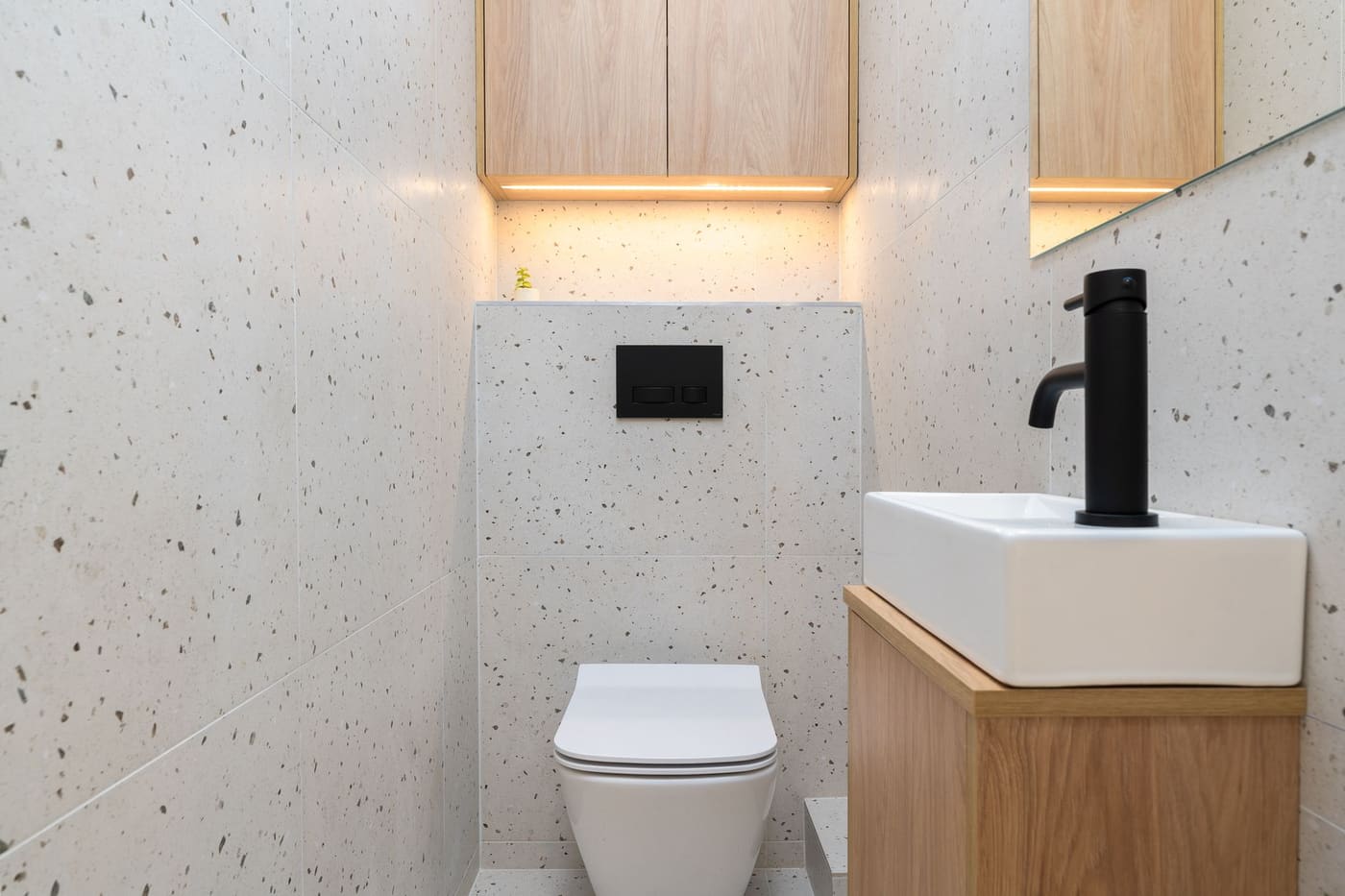
A small bathroom looks less cluttered when you reduce the number of separate objects you can see from the doorway, clear the floor, and make what remains match. In a small room, clutter is about the count and variety of things in view, so subtracting beats organizing.
A dozen mismatched bottles on a ledge is enough to make a small room look busy. The same bottles in two matching containers look calm. This guide is only about what the eye sees. If the room truly lacks places to put things, that is a capacity problem, and bathroom storage ideas by height zone is the better starting point.
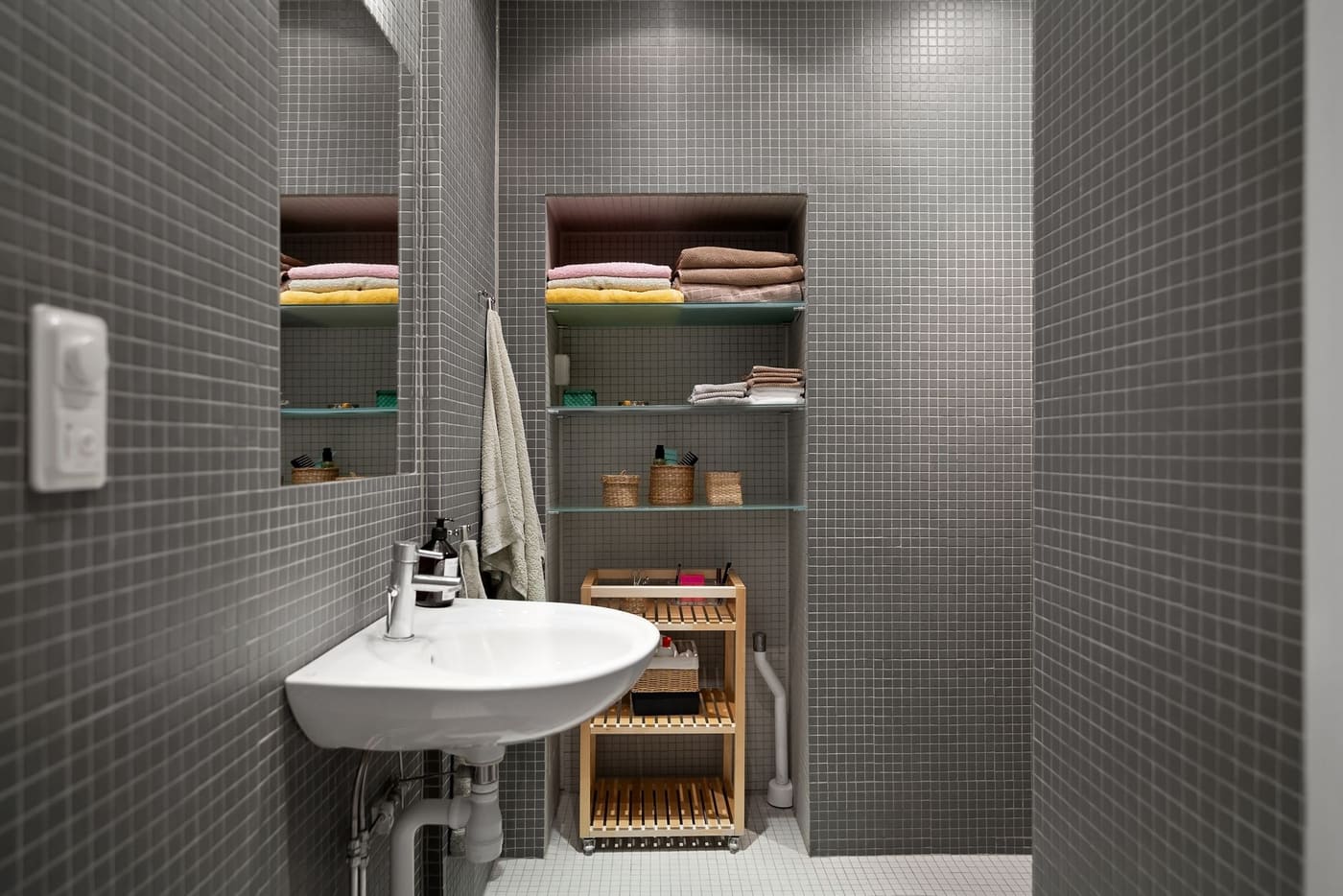
Stand in the doorway and count
Stand where a guest would stand, at the door, and count the separate items you can see: bottles, tools, containers, towels, decor. A rough target for a small bathroom is under 15 visible objects. That number is a rule of thumb for a working goal, not a measured standard, so adjust it to your room. Write down your starting count and count again at the end.
Take a photo from the doorway. Photos show clutter you have stopped noticing, such as a half-empty razor pack on the tank or a toothpaste cap on its side. Then check three sightlines, because clutter in these places has the most effect:
- The counter and mirror, which the door usually faces.
- The tub or shower, especially bottles on the rim and a patterned curtain.
- The floor, where anything you add cuts the visible floor area.
Clear the floor first
Floor items make a small room look the smallest, and a clear floor makes it look larger. Typical offenders are a trash can, a scale, a basket of towels, a hamper, a toilet brush and a stack of toilet paper.
- Scale: store it under the vanity or in a narrow gap beside the toilet, and take it out when you use it.
- Hamper: move it to the bedroom or hallway if the household can tolerate carrying towels. If not, a slim hanging bag behind the door takes no floor space.
- Toilet paper: a wall-mounted or tank-top holder with a hidden spare stack beats a floor basket.
- Bath mat: one mat, in a plain color that suits the floor.
If the floor still holds more than three objects after this, one more needs to move. It is the quickest change you can make in an afternoon, and it costs nothing.
Use fewer, matching containers
Mixed packaging is the biggest source of visual noise on a shelf. A dozen bottles in different colors, shapes and brand fonts read as chaos even when they are lined up.
- Decant shampoo, conditioner and hand soap into two or three matching pump bottles, in one color or clear. Label them with a waterproof label.
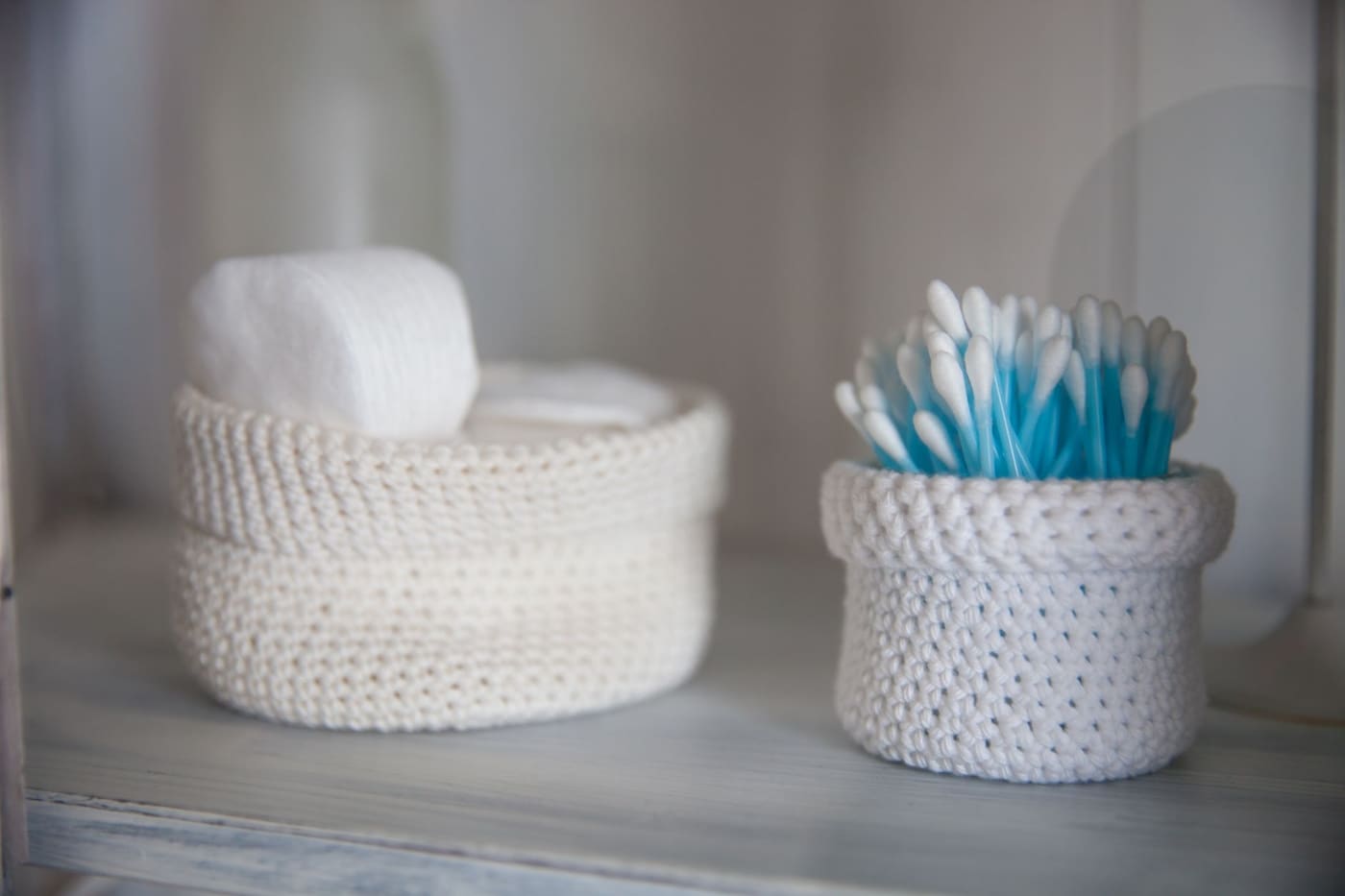
- Group small items (cotton rounds, swabs, hair ties) in a single lidded jar.
- Limit colors: two or three tones across containers, towels and the mat. A neutral palette recedes. Bright packaging does not.
Decanting only makes sense for products you buy in large sizes, and the pump bottles are often a few dollars each. Do not decant medicines or cleaning products. They stay in their original labelled containers, which carry the directions and warnings, and out of children’s reach.
Swap bulky shapes for lighter ones
Some furniture and fixtures read as bigger than they are. When you have a choice, these tend to make a small bathroom look less crowded:
| Instead of | Consider | Why |
|---|---|---|
| Heavy shower curtain in a dark pattern | A clear or light-colored liner and curtain, or a glass panel | Keeps the sightline open |
| Floor-standing storage tower | Wall-mounted shelf or cabinet | Floor stays visible |
| Several small towel bars | One longer bar or a row of hooks | Fewer separate lines |
| Open basket of rolled towels on the floor | Towels hung on hooks | Clears the floor |
Wall-mounted pieces need fixings that hold: a stud or the right wall anchor for the wall type. In a rental, check the lease before drilling and consider tension-based or over-the-door options instead.
Leave blank space on purpose
A blank stretch of counter and shelf gives the eye a place to rest, and that is a large part of why a room reads as calm. Aim for at least one clear surface you can see from the doorway. What stays on the counter has its own test in what to keep on a bathroom counter, and the tub area is covered in shower storage ideas that stay neat. In a tiny room, apply both strictly: anything used less than once a day does not sit in view.
Edit each sightline with one question
| Sightline | Question to ask | Quick fix |
|---|---|---|
| Counter and mirror | Can I see more than one tray’s worth of items? | Group on one tray, move the rest to a drawer |
| Tub or shower | Do bottles sit on the rim, or is the curtain busy? | Move bottles to a shelf or caddy, switch to a plain or clear curtain |
| Floor | Is anything on it besides the mat? | Hang, mount or move it |
| Mirror reflection | Does the mirror show a messy corner? | Clear or cover the area it reflects |
The mirror line is easy to forget. A mirror that faces a pile of towels or a crowded shelf shows you the clutter twice, so edit what it reflects, not only what is in front of it.
Let towels and light work for the room
Towels are large soft objects, so they have more visual impact than anything else in the room. Keep no more than two per person in the room, in the same color family, folded or hung the same way. A mix of five colors on one bar looks like clutter even when they are all clean. For hanging and folding methods, see keeping bath towels from making a bathroom feel messy.
Light changes how full a room looks. A dim room hides its edges and feels tight, while an evenly lit room shows its real size. If you change a bulb, use one rated for the fixture and, where required, for damp locations. The vanity lighting calculator helps with how much light a mirror needs. Any change to wiring or a new fixture is a job for a licensed electrician.
Keep it that way with one-in, one-out
A tidy small bathroom drifts back toward clutter unless you have a routine, and three habits do most of the work:
- One in, one out: a new bottle comes in only when an old one leaves. This rule holds the visible count down over months.
- Daily 60-second reset: put items back, hang the towel, wipe the sink.
- Monthly purge: take everything out of one drawer, toss empties and anything you no longer use, and put back only what you use.
Expired products are common clutter. Some cosmetics and skincare products carry a small open-jar symbol showing months of use after opening, and sunscreen and medicines have expiry dates. Use these printed dates as your guide to when to toss.
An editing pass in about 30 minutes
- Take a doorway photo and write down the visible count (2 minutes).
- Clear everything off the counter, tank, tub edge and floor into a laundry basket (5 minutes).
- Toss empties and expired products (5 minutes).
- Put back only the daily group (5 minutes).
- Sort the rest into the vanity, a high shelf or another room (10 minutes).
- Take a second photo, count again and compare (3 minutes).
If the count is still well above 15, repeat step 4 and be stricter. The room will not get bigger, but it will look calmer, and calm reads as space.
Where this comes from
This is mostly common-sense editing advice, so few of its points are checkable facts. The 15-object target and the timings are working rules of thumb, not standards. The safety points follow published household poison-prevention guidance (medicines and cleaners stay in original containers, out of children’s reach) and standard advice to hire a licensed electrician for wiring. Prices are typical US ranges that vary by store and region.