
The shower storage that helps most is a single drained caddy or shelf for the daily bottles, hooks for a razor and a scrubber, and wall-mounted dispensers for the products you use in bulk. Together they keep surfaces clear and let water drain away. What does not help is adding more places to put bottles, because shower clutter grows to fill every shelf.
The shower is the hardest room in the house to keep tidy because everything in it is wet, slippery, and used with soap in your hands. Storage has to hold items up and let them drain, and it has to survive constant water. This guide compares the main shower storage types, how to choose by your wall and your lease, and the rules that keep the shower looking clean instead of crowded.
Count the daily bottles first
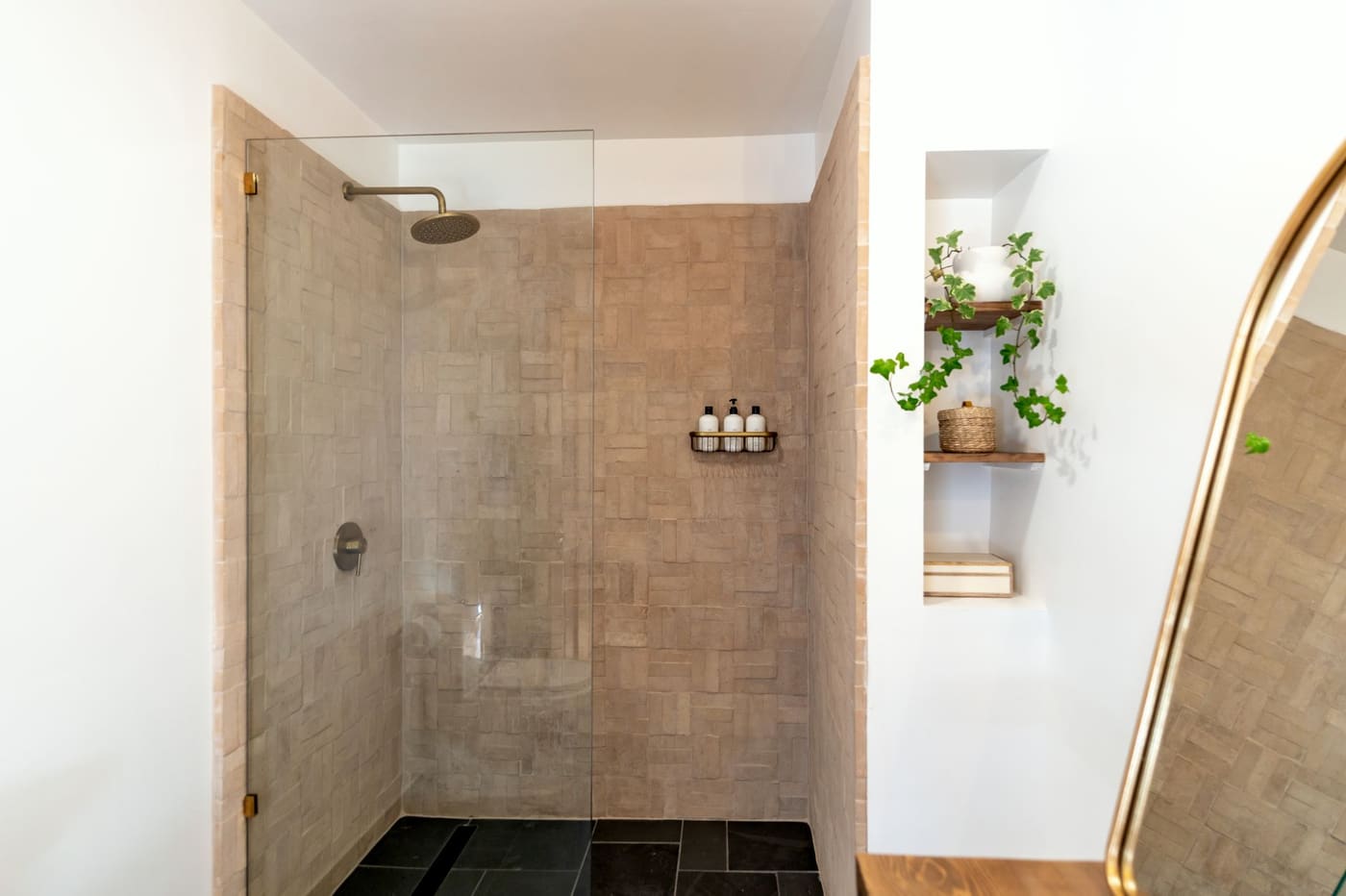
Before choosing storage, count what you actually use. Most people use a shampoo, conditioner, a body wash or bar, and sometimes a face wash and a razor. That is four to six items per person. Anything beyond that is a spare, a duplicate, or an experiment, and it can go to a cabinet.
The number sets the capacity you need. One person with five items needs a single shelf or caddy, not three. If you share the shower, you need one tier per person. The mistake is to buy storage for the bottles you own instead of the ones you use, which is how a shower ends up with three caddies and still looks messy.
Compare the main storage types
| Type | Good for | Watch out for | Typical cost (often) |
|---|---|---|---|
| Tension pole caddy | Renters, corner showers, 3 or 4 tiers | Needs a flat ceiling height within the pole’s range; can slip if overloaded | $20 to $50 |
| Over-the-showerhead caddy | No-drill, easy install | Weight limits, and it can rattle or block the showerhead | $10 to $30 |
| Corner shelf, adhesive | Tile or glass walls, light loads | Adhesive can fail with heat and steam, and it can mark some surfaces | $10 to $30 |
| Corner shelf, screw-mounted | Heavier bottles, long term | Drilling into tile, which needs the right bit and sealing, and the lease allows it | $15 to $50 |
| Suction-cup shelf | Smooth glass or tile only | Fails on textured or grouted surfaces, and may drop without warning | $8 to $25 |
| Hooks and rail | Razors, loofahs, washcloths | Only light items | $5 to $20 |
| Built-in niche | New builds or renovations | Needs a contractor, not a casual project | Varies widely |
Pick based on the surface and your willingness to drill. On smooth tile or glass, suction and adhesive options work for light loads; on textured tile, they often fail. Always check the weight rating and do not exceed it. A full large bottle of shampoo can weigh a pound or two, so a shelf with three of them needs a solid rating, and the rating on the package is the limit to trust.
If you rent, the no-drill choices (tension pole, over-the-showerhead, and hooks) are the safest bets. Check the lease before using adhesive or drilling, and keep any hardware you remove.
Check the fit before you buy
Measure the three things that decide whether a shower caddy works: the height of your ceiling or shower rod for a tension pole, the diameter of the showerhead arm for an over-the-head model, and the size of your largest bottle for any shelf. Many caddies are sold with a stated maximum bottle height, and a tall conditioner bottle that does not fit will end up on the tub edge. Check that the caddy does not sit in the water stream, since constant spray speeds up wear and fills each shelf with water. Finally, look at the bottom of the unit, because a pole base that rests on a slippery tub floor can slide, and a rubber foot or a textured base helps it grip.
The tub ledge and floor
Bottles on the tub rim or floor are the most common source of shower clutter, since they are the easiest place to put something down. They also block the drain and trap water and grime beneath them. Treat the floor and the rim as a no-storage zone, and every bottle needs a shelf, hook, or dispenser. If you have a bench or ledge in a walk-in shower, it can hold one or two items, such as a bar of soap in a dish, but it needs to be wiped often.
Prioritize drainage and airflow
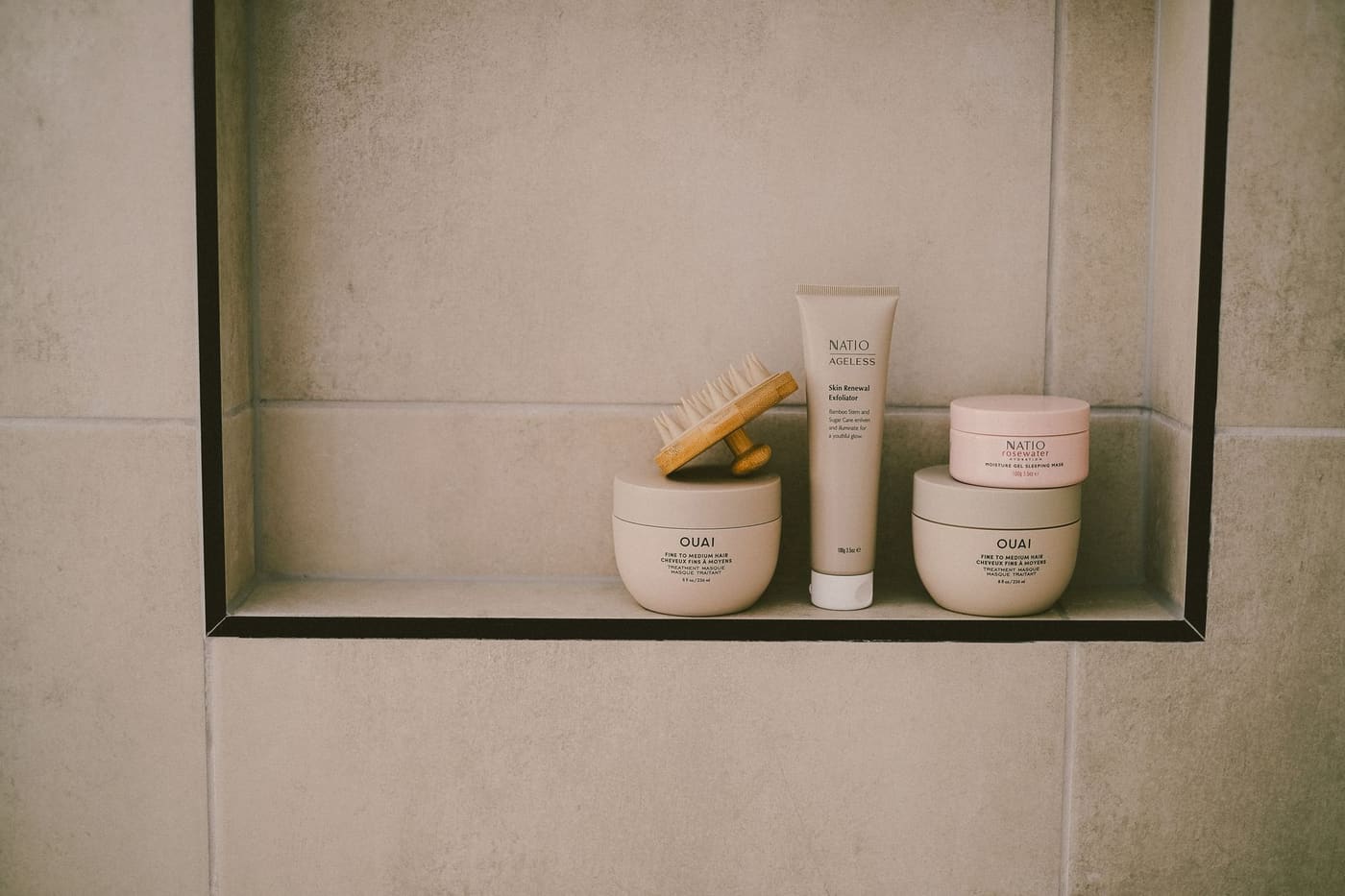
Water that stays on a shelf leads to soap scum, rust, and a slimy bottle base. Choose storage that lets water drain and air move.
- Open slats or mesh drain better than solid bottoms. A solid shelf with no drainage holds a puddle under each bottle.
- Hang bottles upside down if the bottle design allows, so the product is at the dispenser and the base dries.
- Leave space between bottles, about an inch, so air gets to the sides.
- Tilt or choose sloped shelves that run water toward the drain.
- Wipe or rinse the shelf every week or two, because soap scum builds in a thin layer.
Material matters. Stainless steel and aluminum with a good coating resist rust better than plain chrome-plated steel, and plastic and silicone never rust. Even rust-resistant metal can spot over time where water sits.
Switch to wall-mounted dispensers for bulk products
If your household uses large bottles of shampoo, conditioner, and body wash, a wall-mounted dispenser set replaces rows of bottles with three uniform pumps. This is the single biggest visual change you can make in a shower.
- Refill from a bulk container, and rinse the pump every few refills.
- Label each pump, because identical pumps can be confusing, especially when your eyes are closed during rinsing.
- Install with adhesive or screws according to the product and your wall; screw mounts hold better, and adhesive ones may need a few days to cure before use.
- Check that the pumps do not block the showerhead or the stream of water.
Dispensers are not for everyone. They suit people who use the same products consistently, and they are a poor choice if you switch products often or if each person has a different shampoo, since the pumps will be for one person’s product only.
Keep razors, scrubbers, and loofahs dry
Items that stay wet grow bacteria and mold faster, so they need their own spot with airflow.
- Razor: hang it from a hook or place it in a holder where the blade can drain. Do not leave it in a puddle, which dulls blades and speeds up rust.
- Loofah or sponge: hang it where it can dry between uses, ideally outside the wettest part of the shower. Dermatologist guidance commonly cited is to replace a natural loofah every three to four weeks and a plastic mesh pouf about every two months, sooner if it smells musty or shows mold.
- Washcloth: hang to dry, then launder after each use or two.
- Bar soap: use a slotted dish that drains, rather than a solid one.
Avoid hanging wet items on the shower curtain liner, where they hold water against the surface and encourage mildew. See the guide to reducing bathroom moisture for ways to speed up drying after a shower.
Limit the lineup and hide the rest
The final rule is the one most people skip. Keep only what is in current use in the shower, and store everything else in a cabinet.
- Put one bottle of each product in the shower.
- Keep spares out of the room. The linen closet and backup toiletry guide covers where they can go.
- When a bottle is empty, recycle it and bring in the spare.
- Once a month, remove everything from the shower, wipe the shelves, and put back only what you used in the last month.
Wipe the bases of bottles when you clean, since they leave rings. Use gloves and ventilate the room when cleaning, and never mix bleach with ammonia or acid-based cleaners, which the CDC warns releases dangerous gases. Mold on hard surfaces smaller than about 10 square feet can usually be cleaned with detergent and water and dried well, according to the US EPA. If growth keeps coming back, particularly on the caulk, or you suspect water damage behind the wall, call a professional rather than scrubbing it away. If children use the shower, keep cleaners and razors out of their reach.
Keep the look calm
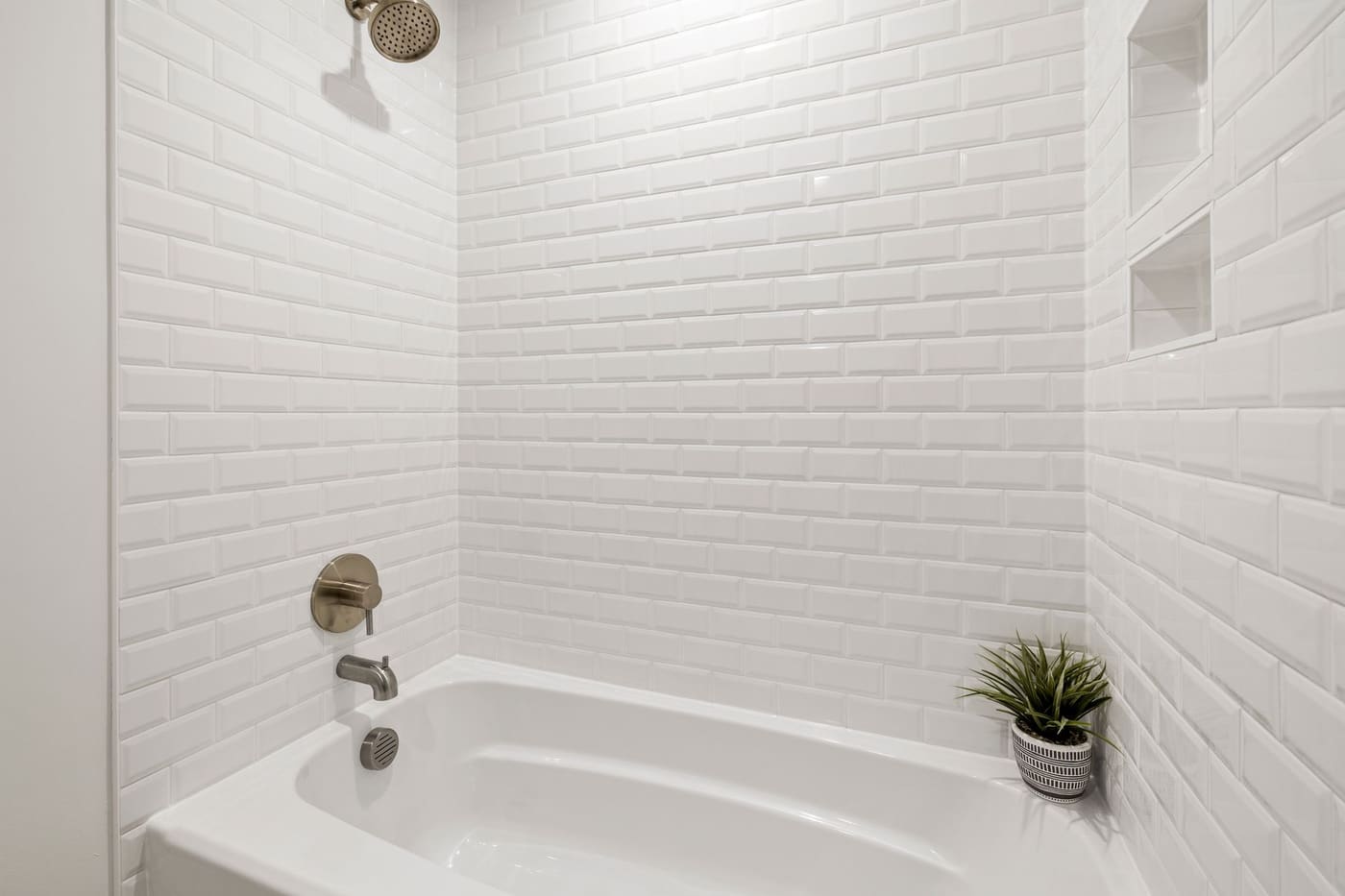
Matching bottle colors, a single shelf and a clear curtain tend to read as calm, while six colors of bottle on three shelves reads as noise even when clean. If you keep original packaging, group similar colors and face labels forward. The wider visual rules are in making a small bathroom look less cluttered. For spares and backups, the bathroom storage checklist is a quick way to decide what stays out of the shower.
Where this comes from
This guide draws on published dermatologist guidance on replacing loofahs and poufs, US EPA guidance on mold cleanup, and CDC guidance on not mixing cleaning products. Weight ratings, cure times and fit limits come from manufacturers’ own package instructions, which you should follow over any general advice. The bottle counts and spacing are rules of thumb. Prices are typical US ranges that vary by store and region.