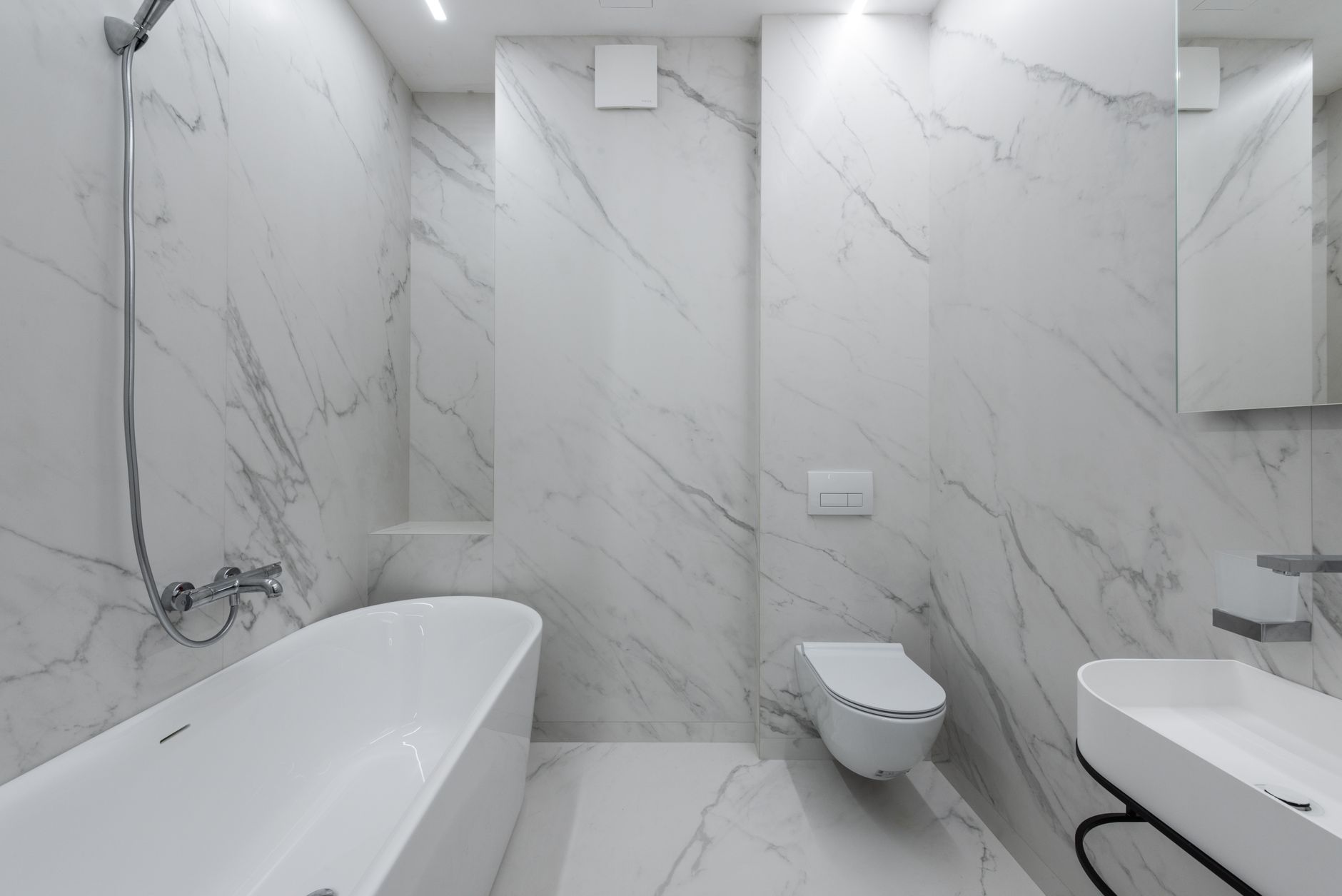
Cleaning time is set long before you pick up a cloth. A bathroom with fewer grout lines, sealed joints, a vanity you can sweep under, and shower walls with no ledges to hold water takes noticeably less effort every week for years. This guide covers the design and material choices that do that, what they typically cost, and what a renter can do instead. It is about the room itself, not habits. For daily and weekly routines, see the bathroom cleaning schedule.
The pattern behind every item below is simple. Dirt and moisture collect in joints, seams, ledges, tracks, and textured surfaces. Anything that removes a joint, a ledge, or a texture removes a place for grime to sit.
Quick comparison: what to change and what it costs
Prices are broad, typical ranges and vary a lot by region, size, and whether you hire someone. Treat them as a starting point for quotes.
| Choice | Why it cleans easier | Typical cost range | Who can do it |
|---|---|---|---|
| Large-format tile | Fewer grout lines | Often $3 to $15 or more per square foot for tile, plus installation | Homeowner |
| Epoxy or sealed cement grout | Absorbs less water and stains | Sealer often $10 to $20; epoxy grout usually costs more than cement grout | Homeowner (sealer: renter with permission) |
| Floating or open-leg vanity | Floor is open to sweep and mop | Often a few hundred dollars and up for a basic unit | Homeowner |
| Solid-surface or acrylic shower walls | Few or no grout lines | Often from several hundred dollars to well over $1,000, plus installation | Homeowner |
| Frameless glass door | No metal track or frame to collect scum | Often well over $1,000 installed | Homeowner |
| Simple, smooth fixtures | Fewer crevices | Varies widely | Homeowner |
| Matching containers and hooks | Fewer shapes to wipe around | Often $10 to $40 | Anyone |
What a homeowner can change
Tile size and grout lines
Grout is the hardest thing to keep clean in most bathrooms because it is porous and sits in narrow lines that trap soap film and moisture. Large-format tile, often 12 by 24 inches or bigger, reduces the number of lines on a wall or floor. A shower wall covered in tiny mosaic can have several times the grout length of the same wall in large tile.
Choose porcelain or glazed ceramic where you can. Both resist water and staining. Very smooth, glossy tile shows water spots and fingerprints, while heavily textured tile holds soap film in its surface, so a smooth satin or lightly honed finish is a reasonable middle ground. Floors need tile rated for wet use with enough grip, so do not pick a glass-smooth finish for the floor.
Grout type and sealing
Standard cement grout is porous. Two options help:
- Epoxy grout is much less porous and resists staining, but it is harder to install and usually costs more, so many people hire a tile setter for it.
- Sealing cement grout with a penetrating sealer is a cheaper step. A sealer is often $10 to $20, goes on after a deep clean, and generally needs repeating every year or two depending on the product, so follow the label. Epoxy grout is generally described as not needing sealing.
Seal natural stone only with a stone-safe sealer, and clean it with a pH-neutral cleaner, since acidic cleaners such as vinegar can etch marble and travertine.
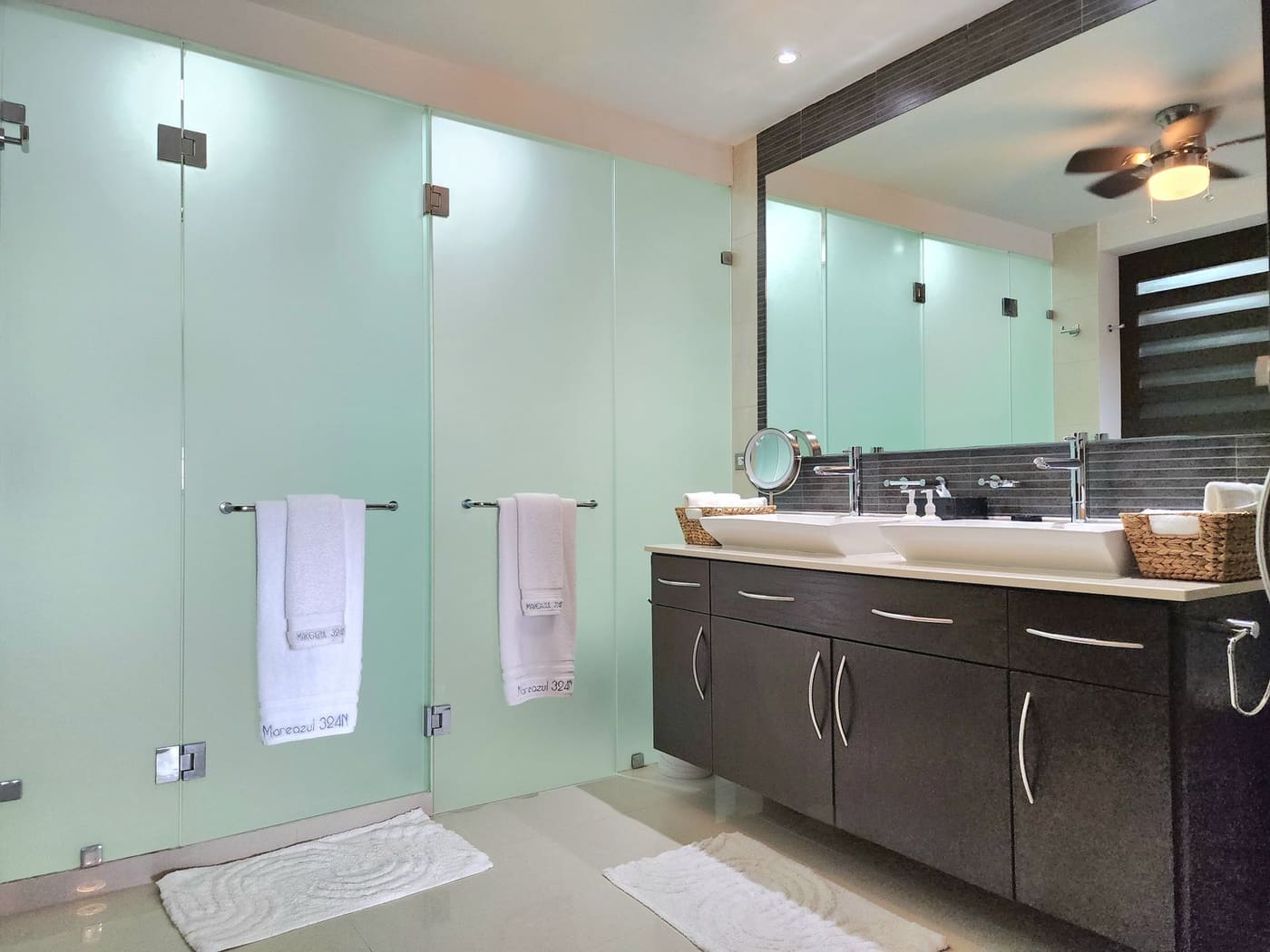
Floating or open-leg vanity
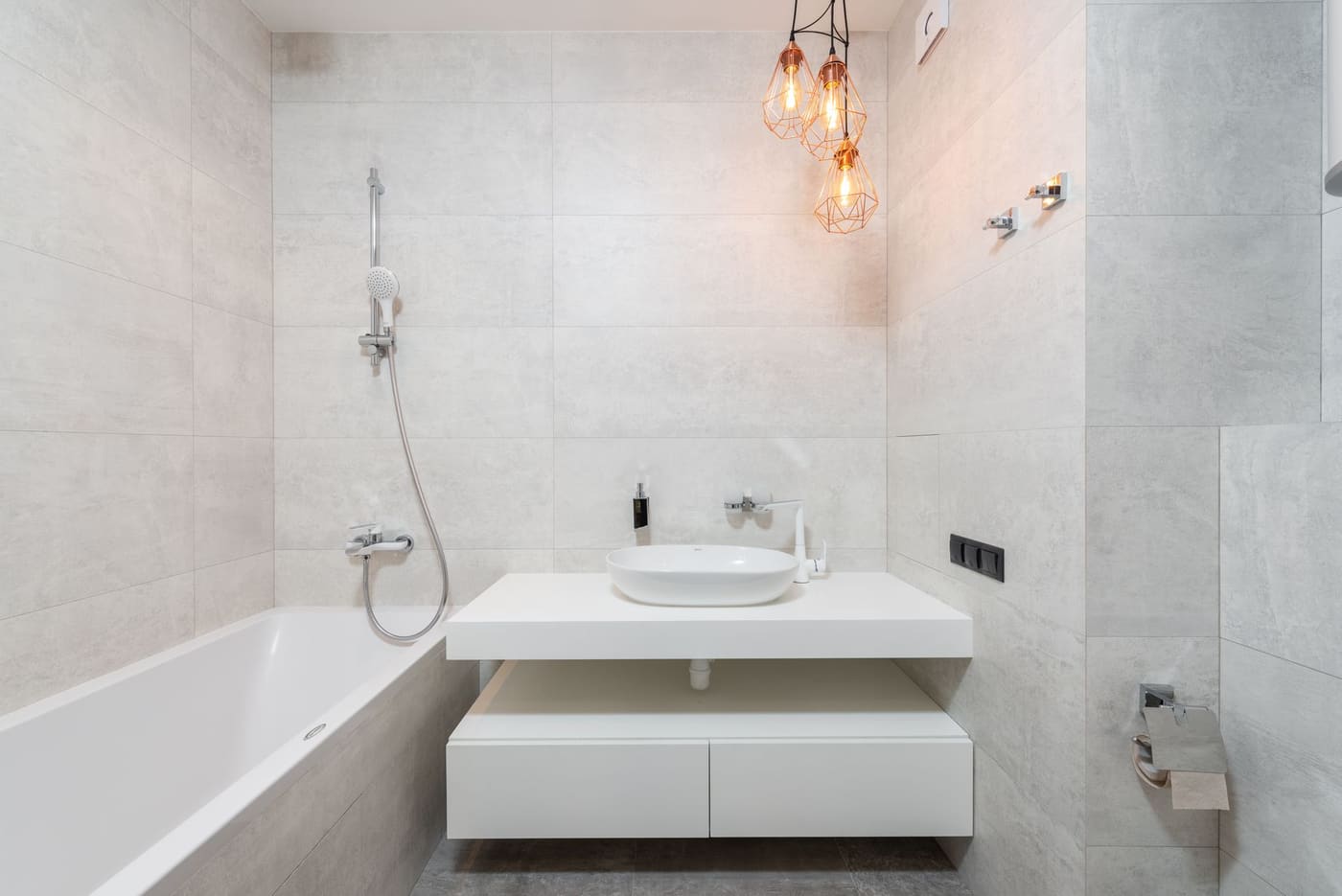
A vanity with legs or a wall-hung cabinet lets you sweep and mop under it, so hair and dust do not pile up in a place you cannot reach. The trade-off is less enclosed storage, so check that you can live with open space under it. Wall-hung units need solid backing in the wall, which is worth a professional’s input. Plumbing and electrical work stay with a licensed plumber or electrician.
Shower walls and surrounds
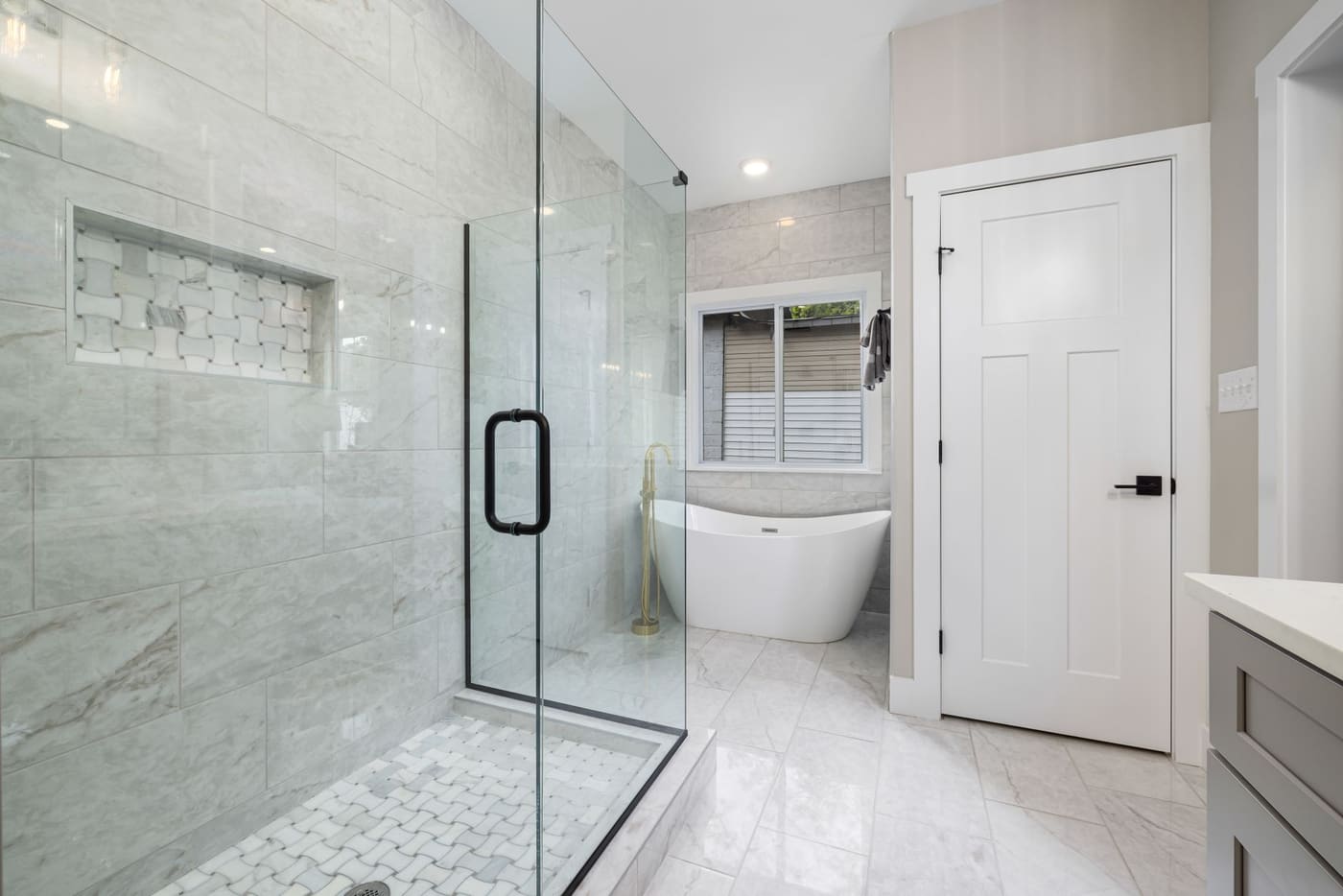
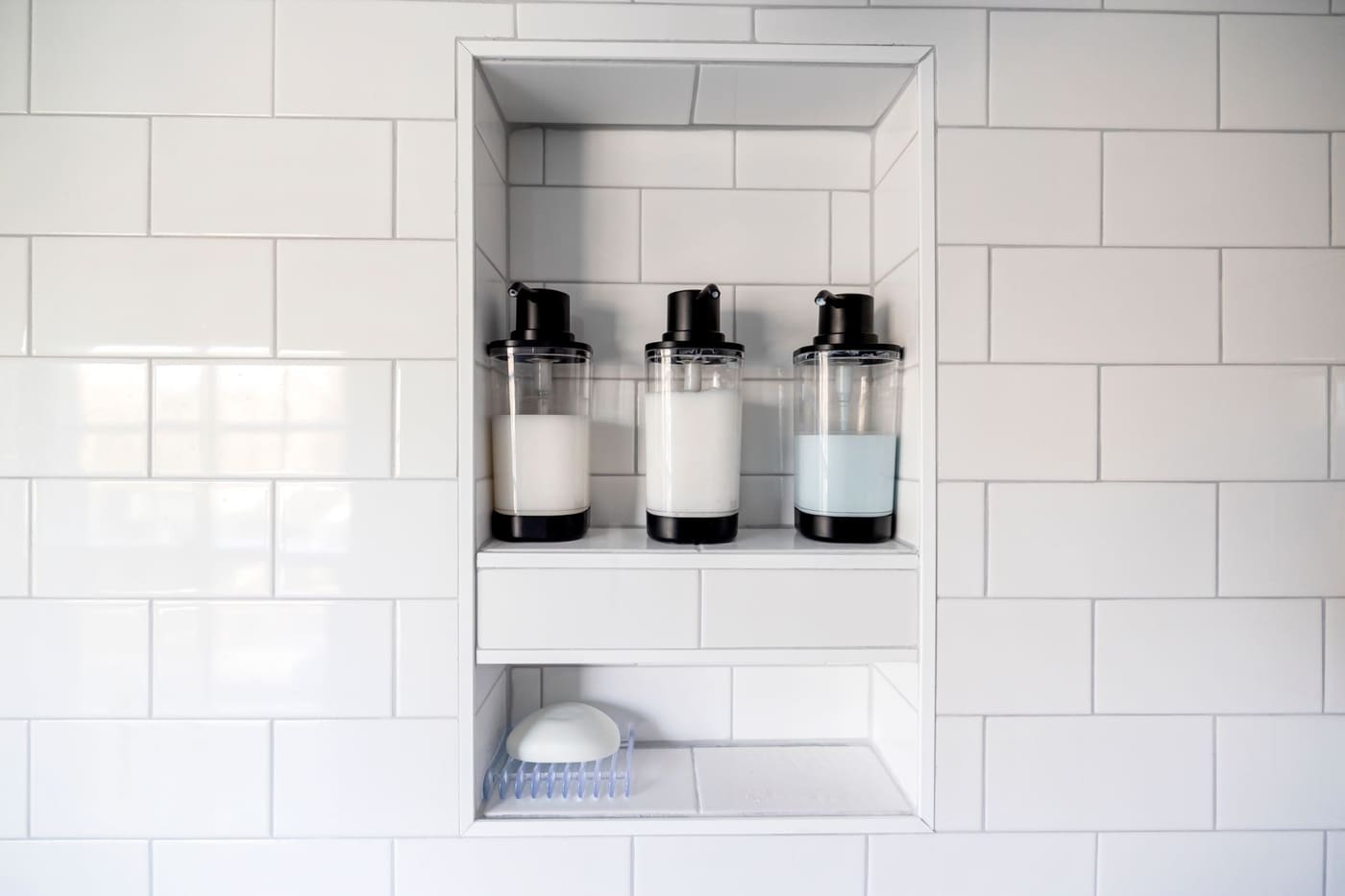
Solid-surface panels, acrylic surrounds, and large porcelain panels have few or no grout lines, so there is less to scrub. Acrylic scratches if you use abrasive powders, and scratches hold dirt, so clean it with a non-scratch sponge and a gentle cleaner. A built-in niche or a few well-placed corner shelves cleans more easily than a mix of hanging caddies, as long as the niche is sealed and sloped slightly so it drains.
Glass: frameless versus framed
A frameless glass door has no metal track at the bottom where soap scum and water collect. A framed door or a curtain tracks, hems, and folds can all hold residue. Either choice works if you squeegee. Glass treatments sold for shower doors can slow water spots, but follow the label and test a small patch first.
Fixtures and hardware
Plain shapes with fewer crevices wipe faster than ornate faucets with decorative edges. A single-handle faucet has fewer places for scale to collect than a three-piece set. Brushed finishes hide water spots better than mirror-bright chrome, though any finish needs drying. Do not change faucets or fixtures that involve plumbing or wiring unless you are confident, and bring in a licensed plumber or electrician where needed.
Ventilation
Damp surfaces collect residue faster. A working exhaust fan is the most useful design feature for keeping a bathroom dry, and a drier room grows less film. The bathroom fan size calculator shows what size to look for. Replacing or adding one involves wiring and ducting, so that is a job for a licensed electrician or contractor. If you cannot add one, see reducing bathroom moisture when ventilation is weak.
What a renter can do
You usually cannot change tile, grout, or vanities, but you can change how much sits on them. Check your lease first, and ask your landlord before drilling, caulking, or sealing.
- Hang instead of stand. Use over-the-door hooks, a tension pole, or an over-the-showerhead caddy so bottles are not on ledges. Adhesive hooks must be rated for the weight, applied to clean, smooth surfaces, and given the cure time on the package.
- Choose a smooth, slotted or wall-hung soap and toothbrush holder instead of closed cups that pool water.
- Swap the shower curtain liner for a smooth one that can be washed or replaced cheaply, typically $5 to $15.
- Use one small tray on the counter so you lift one object, not six.
- Pick matching containers. Same-shape pump bottles and a few uniform containers mean fewer odd shapes to wipe around. They cost little and read as tidier at the same time.
- Ask about caulk. If caulk is cracked or black, ask the landlord to replace it. Do not seal grout or change silicone without permission.
More low-commitment options, ranked, are in renter-friendly bathroom upgrades that are worth doing.
If your budget is small
You do not need a renovation to make a difference. These steps cost little and often have the largest effect per dollar:
- Seal the grout after a deep clean, about $10 to $20.
- Replace failing caulk. Silicone caulk made for kitchens and baths is often under $15 a tube. Remove the old bead, clean and dry the joint, apply a new bead, and let it cure for the time on the label.
- Replace cheap liners and mats with quick-drying, washable ones.
- Take small items off flat surfaces with hooks and a tray.
For a wider ranking of budget changes, see bathroom updates that make the biggest difference for the least money.
When cleaning is not the problem
If black mold keeps returning, grout is crumbling, or you notice soft spots, staining, or peeling near the tub or shower, water may be getting into the wall. That is not a surface problem and no material choice fixes it. Recurring mold and any water damage behind walls are jobs for a qualified professional.
Where to start
Choose the one surface that costs you the most time. If it is grout, seal it now and plan large tile for any future retile. If it is the floor under the vanity, look at open-leg options when you replace it. If you rent, start with hooks, a tray, and matching containers and ask about caulk. One change in the right place beats a list of small ones.
Where this comes from
This is design guidance based on general tile, grout, and sealer practice, including the point that cement grout is porous and epoxy grout is not, plus EPA mold guidance for the water-damage warning. It is not a substitute for a manufacturer’s instructions on any product. Prices are typical US ranges that vary by store and region.