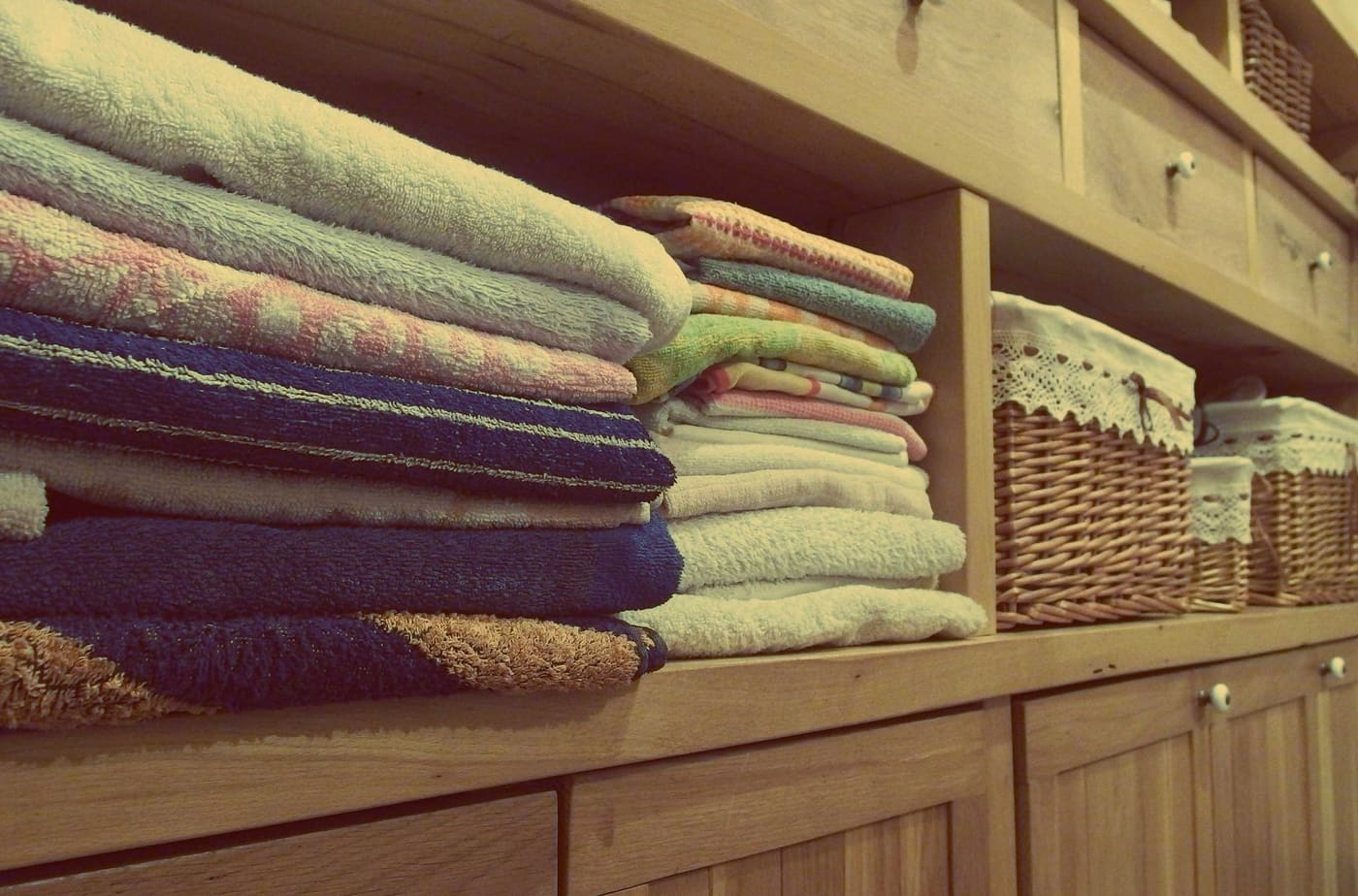
A bathroom linen closet should hold what you reach for during bathroom routines: clean towels, washcloths, spare toilet paper, one spare of each daily toiletry and basic first-aid supplies. Everything else, including bed sheets, holiday linens, cleaning overflow, craft supplies and old products, belongs somewhere else. Extra toiletries beyond one spare each live in a single labeled bin outside the bathroom. The closet works only while you can see and grab each item without moving something else.
A linen closet is prime real estate because it sits next to the room where the items are used and is usually dry and closed. That is exactly why it becomes a dumping ground. This guide sorts the closet, sets how many backups to keep, and shows where the overflow goes. The bathroom storage checklist has tick boxes for the same steps.
Sort every item by one question
Pull everything out and ask of each item: “Do I use this because of the bathroom?” If yes, keep it. If it is for the bedroom, kitchen or garage, it goes there. Anything that makes the closet harder to use gets moved, even if it fits. A first-pass sort into four piles:
- Keep: towels, washcloths, bath mats, toilet paper, backup toiletries, first-aid basics.
- Move: bed linens, tablecloths, blankets, seasonal items and anything for another room.
- Toss or donate: worn towels, expired products and items you have not used in a year.
- Decide later: a single box for anything undecided, with a date on it. If you have not opened it in a month, donate it.
What belongs in the closet, and what belongs elsewhere
Think of the closet as the supply room for the bathroom.
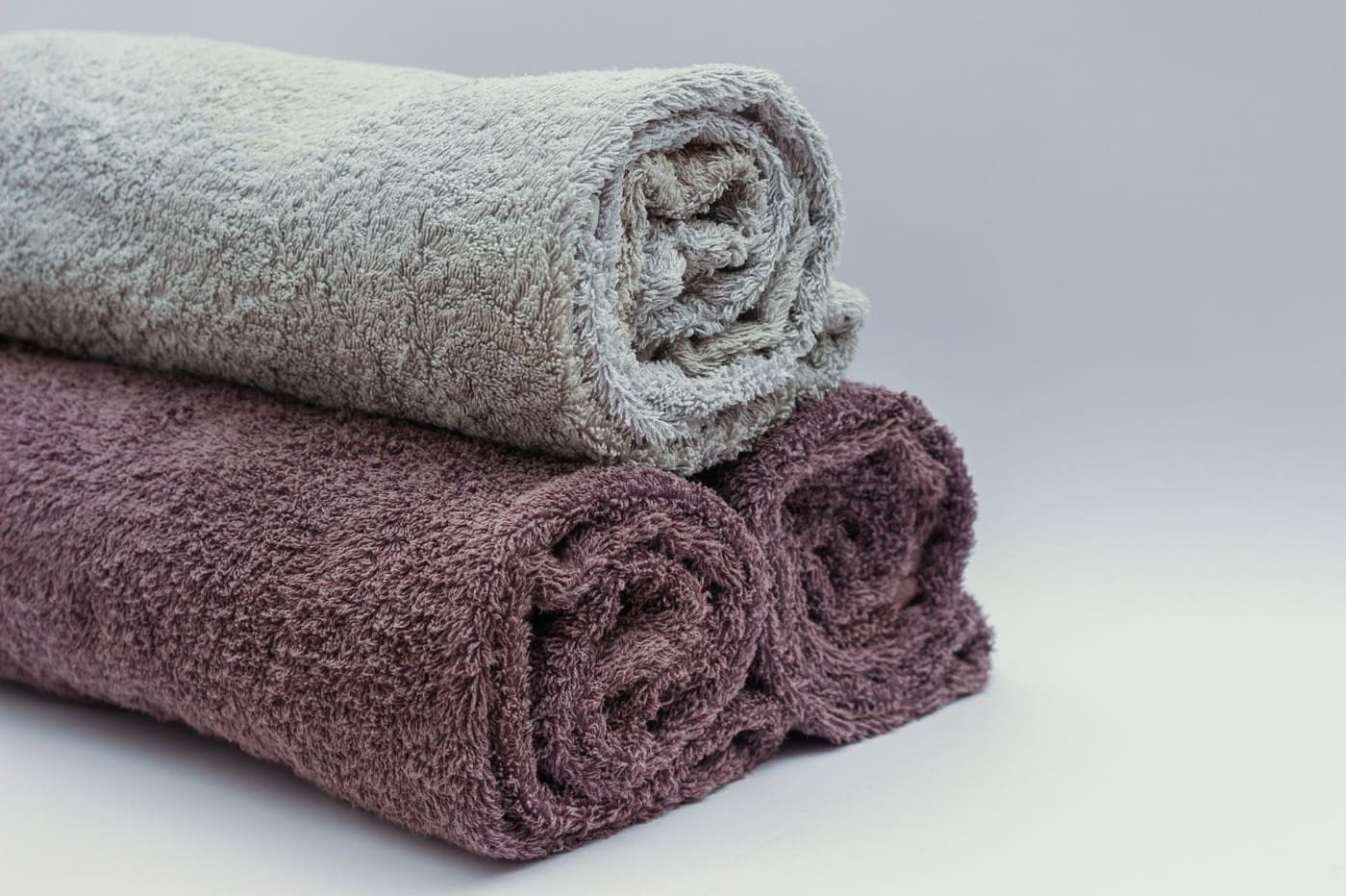
- Towels: a working set per person, plus a few guest towels. A common household practice is two or three towel sets per person: one in use, one in the wash and one spare, though your laundry schedule decides the right number.
- Washcloths and hand towels: folded in a small bin so they do not slump.
- Spare toilet paper: one pack’s worth.
- One spare of each daily toiletry: soap, toothpaste, shampoo, floss, razor refills.
- Basic first-aid supplies: bandages and similar items in a lidded box on a high shelf. Medicines are better kept in a locked box in their original containers, out of children’s reach, in a cool dry spot. A hall closet beside a shower is humid, and the bathroom itself is a poor place for most medicines.
- Bath mats and a small bag of cleaning cloths.
| Item | Better home | Reason |
|---|---|---|
| Bed sheets and blankets | Bedroom closet or dresser | Used in the bedroom, and they take lots of shelf space |
| Holiday or seasonal linens | A storage bin in a closet or attic | Used a few days per year |
| Large cleaning products | Utility room or laundry area | Chemicals do not need to share shelves with towels |
| Old or expired products | Trash or a disposal program | They take space and may be unsafe |
| Hobby supplies and paper | A desk or a storage room | They are not bathroom items |
| Pool and beach towels | A mudroom hook or a separate bin | Often damp and sandy |
| Extra pillows | A bedroom or a bin in a spare room | They are bulky |
If you do keep cleaners in the linen closet, keep them in their original containers in a lidded bin away from towels and food. Poison control guidance for homes with small children is a latched or locked spot, so a low open shelf is the wrong place if children live in or visit the home. Never mix bleach with ammonia or acids: the CDC warns it releases dangerous gases, so store them apart.
Decide how many backups you actually need
Backups are inventory, and inventory does not belong on the surfaces you use every day. Many households keep more spares than they will ever use. Set a “par level” for each item, the number you want on hand before you reorder. The numbers below are starting points to adjust, not standards.
| Item | Suggested backup | Notes |
|---|---|---|
| Toilet paper | One pack (about 4 to 12 rolls) | Per household, not per person |
| Shampoo and conditioner | One spare of each | Per person in daily use |
| Body wash or bar soap | One spare | Bars last a long time |
| Toothpaste | One spare tube | Per person, or shared |
| Toothbrush | One or two spares | Replace the daily one about every three months |
| Razors or blades | One refill pack | Per person who shaves |
| Hand soap refill | One refill | Per sink |
| Skincare staples | None to one | They expire, so buy as you finish |
The rule of thumb is one spare per daily item, not a year’s supply. Stocking up makes sense when an item is cheap and shelf-stable, such as toothpaste, but not for products that spoil or change, such as natural skincare or sunscreen, which has an expiry date. If you currently have five tubes of toothpaste, put four in the backup bin and use them before you buy another. This alone often clears a whole drawer.
Does bulk buying pay off?
Bulk packs lower the price per unit only when you will use the product before it expires and have a place to store it. Divide the pack price by the number of units and compare it to the single price. If the saving is small, or the pack takes a whole shelf, skip it. Paper goods and toothpaste are the most reliable bulk buys because they do not spoil quickly; liquid skincare and sunscreen are the least.
Choose a backup location outside the bathroom
The best location is cool, dry and close enough that restocking takes under a minute.
- Hall or linen closet: the standard choice. Use one shelf or a single bin so backups do not spread across the closet.
- Bedroom closet shelf: a bin on a high shelf works well for small households.
- Under the bed: a flat lidded container fits under most beds and keeps dust away.
- Kitchen or pantry shelf: a possibility for bulk paper goods if a closet is full.
- Utility room or garage shelf: only for items that tolerate temperature swings. Heat and cold can damage many products, so skip skincare and anything with a temperature warning.
Avoid storing backups in the bathroom’s humid air for long. Steam can warp cardboard packaging, peel labels and make some products separate or change texture.
Use one bin, one label, one list
- Choose a single container, such as a lidded plastic bin about 12 by 16 inches. A size that fits the shelf prevents it from growing.
- Label it “Bathroom backups” on the front.
- Sort inside by category with small pouches or dividers: hair, skin, dental, shaving, paper.
- Tape a short list of par levels inside the lid.
- Keep a running shopping list on a phone note or on paper nearby.
When you take a spare out, add that item to the list. That avoids both running out and buying duplicates, which is where overstock starts. Bins like this often cost $8 to $25 each, and the same bin works for pouches and dividers if you add a few small trays.
Keep a small in-room stash
The bathroom still needs a small supply, because walking down the hall for toilet paper is annoying. Keep one contained spot with only what you will use in the next week or two: two to four rolls of toilet paper, one spare of each daily product and a hand soap refill. Under the sink is a typical place, but protect paper goods from leaks and condensation; see organizing under a bathroom sink for fitting bins around pipes. A good test: if the in-room stash does not fit in one drawer or one small bin, it is too big.

Set up the closet shelves by height and weight
A reliable layout from top to bottom:
- Top shelf: lightweight, occasional items, such as extra pillows or guest towels in a bin.
- Eye level: daily towels, folded in stacks, and a bin of washcloths. This is the most used spot, so keep it open.
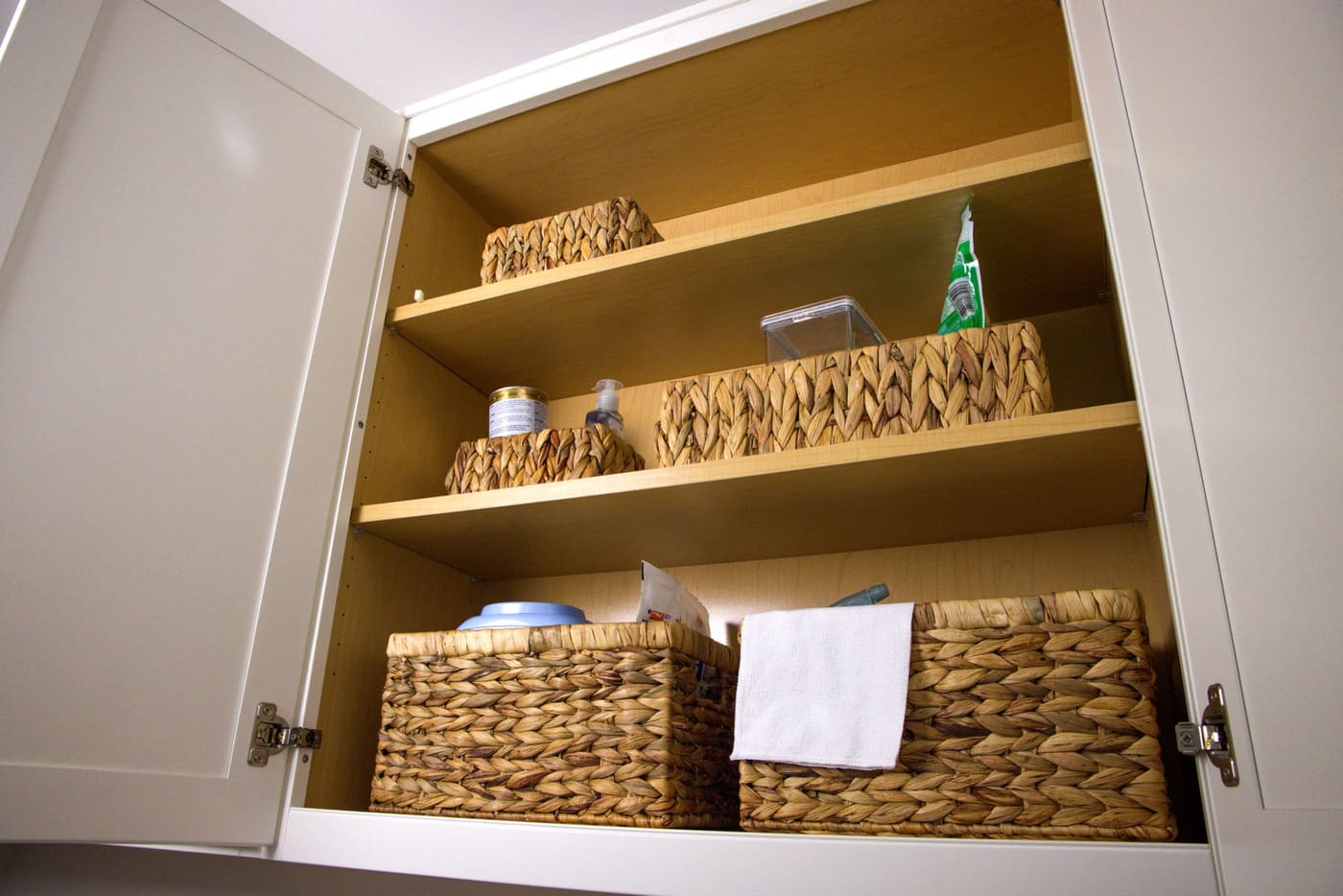
- Waist level: toilet paper, toiletries and small bins labeled by category, plus the backup bin if the closet is its home.
- Floor: heavy or bulky items, such as a basket of cleaning supplies or a spare bath mat.
Fold towels the same way each time, so stacks sit flat and uniform. A tri-fold or a halve-and-halve fold works well. Keep stacks to a modest height, about 6 inches as a rule of thumb, since taller stacks tip over. Shelf dividers or small bins keep stacks from sliding, and a set often costs $10 to $25. For hanging and folding methods in the bathroom itself, see keeping bath towels from making a bathroom feel messy.
Rotate stock so nothing expires
Use older items first, the same idea as “first in, first out” in a kitchen pantry. When you restock, put new items at the back of the bin and older ones at the front. Write the purchase month on the box for products that expire, like sunscreen or skincare. Some cosmetics have a small open-jar symbol showing how many months they are good after opening, and sunscreen and medicines carry expiry dates. Use the printed dates as your guide for tossing. Check the bin every few months. Do not store medicines with toiletries: keep them in their own locked container, in a cool, dry place away from children, check their dates separately, and follow the FDA’s disposal guidance, which starts with drug take-back programs and pharmacy options, and the instructions on the label.
Tame samples, travel sizes and awkward items
Small bottles are the stealthiest overflow. Give them one pouch or box; when it is full, nothing new gets in until something is used or tossed. A ready-to-go travel kit (a few travel-size bottles, a toothbrush and a small razor) saves decanting before each trip. Use samples of products you already like when the current bottle runs out, and toss any bottle you cannot identify or that smells strange.
Some backups do not fit a bin. Break open big packs of toilet rolls and keep a few in the in-room stash, with the rest in their wrapper in the closet. Store refill jugs upright in a tray, because jugs can leak, and wipe up spills since slippery floors are a hazard. Follow the label on aerosols and anything flammable: it may say to keep them away from heat or out of a hot bathroom.
Watch humidity and airflow in the closet
A closet next to a shower can be humid. Towels that go back damp can smell musty, and packed shelves have no airflow.
- Make sure towels are fully dry before they go back in. A towel that feels cool is probably still damp.
- Leave a small gap between stacks so air can move.
- Leave the closet door open now and then, especially in humid weather.
- Keep paper goods and cardboard off the closet floor and away from the wall that touches the shower.
- Check for musty smells and dark spots. Small areas on hard surfaces can be cleaned with detergent and water while wearing gloves and with good ventilation, and the US EPA treats mold over about 10 square feet as a professional job. If spots keep returning or the wall feels damp, there may be a moisture problem behind it.
Room-level moisture control is covered in the guide to reducing bathroom moisture.
Cap what goes in, and add a guest shelf
A closet that is 100 percent full has no working space, so aim for about 75 percent. Use “one in, one out” for towels, and when a new one arrives an old one retires as a cleaning rag or a donation. Label shelves with a small tag and do a quarterly check to pull out anything that has drifted in. If the closet still overflows, you probably have too many towels or spares, and the fix is to reduce inventory instead of finding more shelf space.
If visitors stay, give them one dedicated bin or shelf holding a folded towel, a washcloth, a spare toothbrush and a travel-size set of soap and shampoo. The guide to setting up a bathroom for guests covers what to put out. For everyday restocking, link it to laundry day: when towels come out of the dryer, check how many spare rolls and bottles are left and note what is low on your phone.
If you do not have a linen closet
The same sort applies, but the storage changes. A tall narrow cabinet, an over-the-toilet unit or a set of wall shelves can hold the “keep” list; the options are in bathroom storage ideas by height zone. Keep a basket of rolled towels for guests and move bed linen to the bedroom. In a small room, only a day or two of towels should be in the room, and the rest can live in a hallway closet or a bedroom. If you can see and grab everything in one reach, the system is working; if not, sort again.
Where this comes from
The medicine points follow US Food and Drug Administration guidance on storing and disposing of medicines and published poison-prevention guidance from poison control and children’s health organizations. The mold threshold follows US EPA mold guidance, and the bleach warning follows CDC guidance. Par levels, shelf layouts and stack heights are practical rules of thumb, not standards. Prices are typical US ranges that vary by store and region.